After three collective years of living in Rome, I’ve had friends, friends of friends, coworkers, my friend’s cousin’s mother-in-law- basically a lot of different people- ask me for my recommendations. These consigli are definitely bound to change as I learn more and as time passes, but some of this information is evergreen- just as the Eternal City.
Finding accommodation in a city as sprawling and filled with “unmissable” sights can be challenging. While I encourage for added research, here are my top suggestions for a first-time trip to Rome, so that you are well-connected via ATAC (the public transportation system), close to not only the “must-sees,” but also the must-eats and must-drinks! Rome is a pretty safe city to begin with, and we’re fortunate enough that there aren’t any real “no-go” areas in the city center itself. While there are some sections of neighborhoods further from the center that I would suggest avoiding, the most common crime is petty theft, so be attentive in crowded areas like buses/trains. Like anywhere in the world, you just have to be aware of your surroundings and know your resources in case of emergency.
Lastly, a disclaimer: I have never stayed in a hotel, Airbnb, or hostel while in Rome, so while I do not have suggestions to specific accommodations, these recs are based on my experiences hosting friends and planning their visits to Rome.
PRATI (prah-tea)
For a quiet, well-connected part of town, Prati is the best bet for any first-timer. It’s easy to get to by metro, convenient for the Vatican, has many good hotels and decent eateries to choose from. It is very easy to get to the historic center across the river from Prati, as well as a 20-minute stroll along the river to get to Trastevere. Throughout the day, thousands of tourists flock to St. Peter’s Basilica and the Vatican museums, but also to frequent the good shopping on Via Ottaviano and in and around Cola di Rienzo. If you hate crowds, avoid the Vatican area on Wednesday (papal audience) morning and Sunday (papal blessing) morning. It quiets down throughout the evening, although you’ll still find pockets of life in some popular bars and jazz clubs. You’ll be connected by several buses (Piazza Risorgimento is a depot that many of them stop around, as well as two tram lines), but most importantly, to the Metro A. One of the more important hubs of the A line is Ottaviano (the closest to the Vatican), however; the Prati neighborhood technically spans between the Lepanto and Cipro stops.
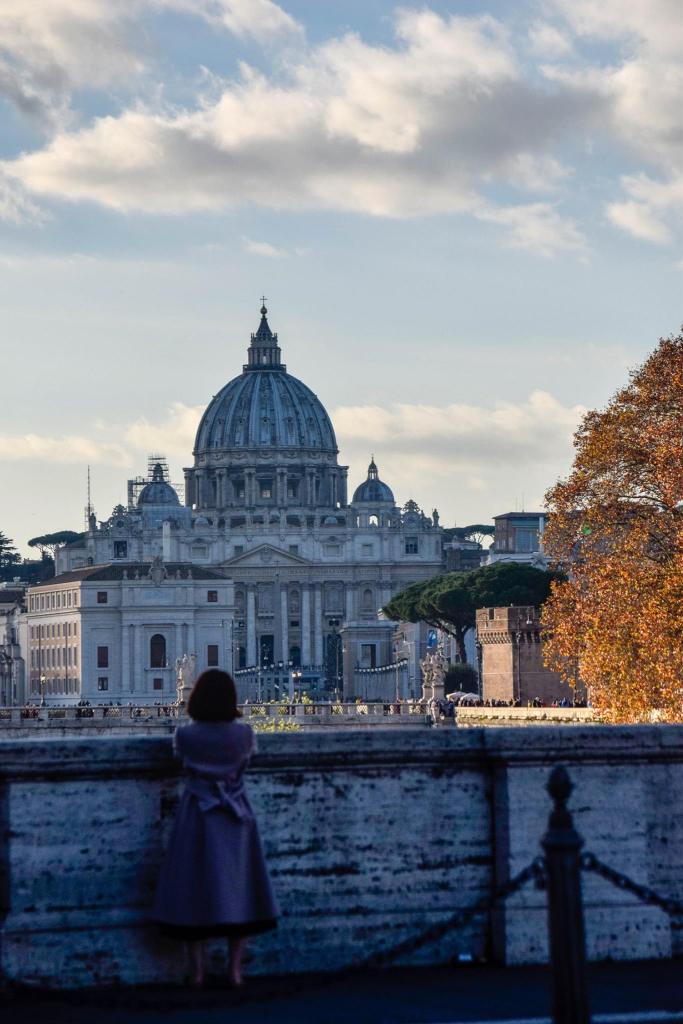
TRASTEVERE (trah-steh-veh-reh)
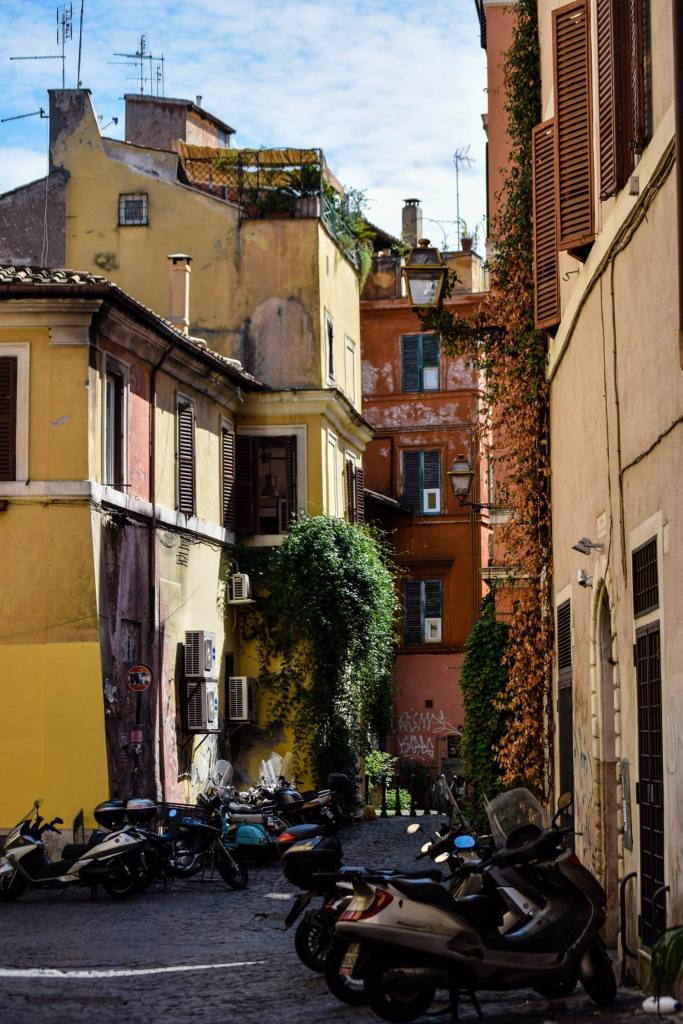
Over the river from the historic center, Trastevere is what you possibly think of when you think of Rome- picturesque, medieval cobble-stoned streets, and vibrant piazzas. It has some interesting sites, with some beautiful churches, chapels and villas, but what it’s known for both by locals and tourists is the food. Trastevere boasts hundreds of bars and eateries, from Michelin-starred to grungy art cafes, to authentic ristoranti and osterie generationally run by Roman families. It’s great to explore by day and it BURSTS to life at night when tourists and locals alike keep it lively until the early hours of the night. Trastevere is not directly connected to a metro stop, that is its biggest fault, however, the historic center is just across the river and it is connected by buses and by a tram that takes you directly there. Keep in mind, Trastevere is also located in between the Vatican and the Testaccio/Ostiense area (where you can pick up the Metro B). The regional train also has a stop (a bit further away from the river) that can connect you to Fiumicino airport if you choose to take the Leonardo Express train.
Other Neighborhoods to Consider for a First-Time Visit:
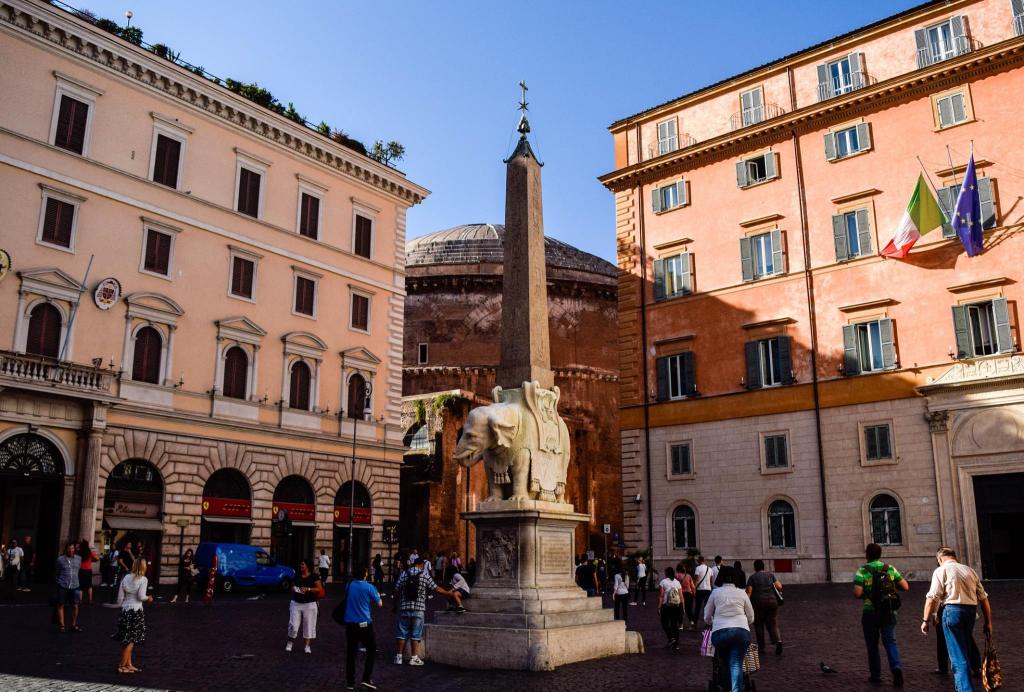

CENTRO STORICO (chen-troh stoh-ree-co)- The historic center is hard to beat for a first time visit, however; keep in mind this should be the place to tour, not necessarily to stay. While some locales are well-frequented for a reason, and the ones that I like will be shared later, there are so many other (and often better) places to eat. There are plenty of hotels to choose from, mostly mid-range or above. The area seems overwhelmingly large, spanning from Piazza del Popolo, enveloping the Jewish Ghetto, and ending just past the Colosseo, but it is walkable, there are a few bus and tram lines available, several metro A and B stops spread throughout, and if it comes to it, you could always get a cab.
TESTACCIO (tes-tah-cho)- Calling all foodies- Testaccio is the place for you! Think Trastevere, but without the partying John Cabot students. Mercato Testaccio is perfect for trying Roman classics but with a new spin. A little off the tourist radar, Testaccio is a former working-class area on the rise. In addition to its delicious food, it has some popular clubs and discos. Not many hotels to boast, but an AirBNB would be interesting here and the nearby Aventine hill has some luxury hotels. Its Ostiense stop is part of the regional train line as well as the metro B line (which could easily connect you to the Colosseum and also the Termini Station to transfer to another line).
MONTI (mohn-tea)- A short hop away from the Colosseum and Forum, Monti is a favorite haunt of Rome’s boho and edgy subcultures and exudes a laid-back village vibe with its hipster boutiques, popular bars and excellent restaurants. The center of action is Piazza Madonna dei Monti, but there’s also plenty going on around Via Leonina and Via Urbana. It’s connected at the Cavour metro stop off of the B line.
*** You will find much of Rome’s budget accommodations near Stazione Termini (the main train station of Rome). It’s not the most attractive, nor is it the safest part of town at night, however it’s not as bad as it’s often made out to be. During the day it’s perfectly fine and you can find some excellent museums and basilicas.

 Ola Wysocki