written for my final directed study in my Master’s program
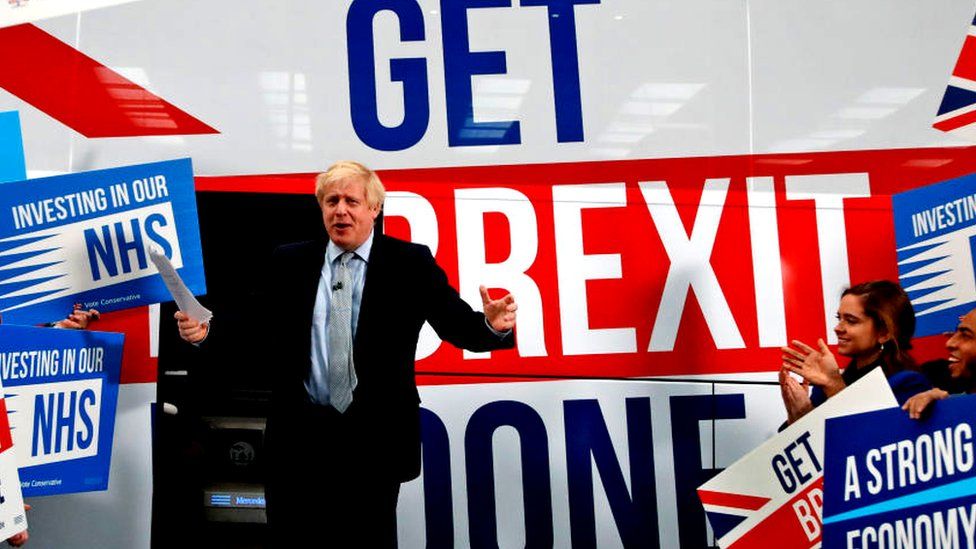
“The electorate was promised that departure from the EU would lead not only to fewer immigrants but to greater prosperity, more welfare spending, less crowded hospitals. Instead, six years after the vote, Britain is less prosperous and more unequal.”
(Applebaum 2022)
Brief Background
While the US was preparing for what was already shaping up to be a polarized presidential election in 2016, the United Kingdom was reeling from the results of a momentous referendum where 52% of adult Britons voted in favor of leaving the European Union (EU). Turnout for the June 2016 referendum was “71.8 percent, with more than 30 million people voting…but there were stark differences across the UK. Northern Ireland voted to remain in the EU, as did Scotland….England and Wales, however, voted in favor of Brexit” (Pruitt 2017).
Boris Johnson’s party promised that a vote to leave was a vote against the status quo, that it was a vote for Britain to “take back control” of the freedoms that were so restricted by the EU’s regulations. Whether it was a vote for economics, or a vote of cultural and identity politics, it’s been a mess ever since. In the wake of the referendum, Britain became one of the worst performing economies in the G7 (Inman 2022), major companies were either moving their operations or deciding to not expand in the U.K., and the British pound dropped by almost 14% (Hunter 2016).
Taking Back Or Losing Control?
“Britain today is a poor and divided country. Parts of London and the southeast of England might be among the wealthiest places on the planet, but swaths of northern England, Wales, Scotland, and Northern Ireland are among Western Europe’s poorest. Barely a decade ago, the average Brit was as wealthy as the average German. Now they are about 15 percent poorer—and 30 percent worse off than the typical American.“
(McTague 2022)
Crushed Free Trade
The EU is first and foremost a union of free trade, further assisted by the fact that most member nations (the UK famously not among the euro-currency carrying countries) also use the same currency, the euro. The UK had been a member of the EU since 1973. For any non-member countries, the EU imposes heavy taxes as a way to motivate EU nations to trade with one another, rather than with an outsider. As a country that was now considered an outsider, Britain was now the victim of those intense trade restrictions, which was a threatening thought seeing as the UK massively depended on trade to support their economy.
After three and a half years of long, complicated negotiations, the UK finally left the EU on January 31, 2020, with a 1-year transition period ending on January 1, 2021, from which the EU-UK Trade and Cooperation Agreement (TCA) took effect. The TCA leaves Britain with a “less limiting” agreement than a full on no-deal Brexit would have, but not by much. According to the Financial Times, almost “one in three UK companies” have reported a decline in EU trade, with “small and medium-sized firms [particularly struggling] to navigate new procedures around exporting and importing with the bloc” (Thomas 2021).
The “hassle” of the new bureaucratic paperwork and added taxation has caused smaller, independent businesses to stop selling to the EU overall. Simon Spurell, of Cheshire Cheese Company (a specialist cheesemaker, shared his frustration: “ the government has successfully removed us from the EU as a business, it is no longer commercially viable and our distributors in France, Spain and Germany are not interested in doing business with us because of both the extra cost and the difficulties with the paperwork (Thomas 2021).

Movin’ on Out
There are some companies that began announcing relocations abroad, though some, like Dyson, announced the move had nothing to do with Brexit. However, there are rumblings of a “race to the Netherlands” that are a direct result of the referendum. According to the Netherlands Foreign Investment Agency (NFIA), of the “218 companies who have set up office in the Netherlands due to Brexit since the 2016 referendum, 78 have done so in the past year. The agency says it’s talking to a further 550 companies considering a relocation or an expansion to the Netherlands” (Persio 2021). The most notable moves include Panasonic, which already had moved its headquarters by 2019 because of “tax issues potentially created by Brexit,” and Sony, who didn’t shift personnel from existing UK operations, but directly stated that the “move would help it avoid customs issues tied to” Brexit (BBC 2019).
According to a survey conducted by the Institute of Directors, “nearly a quarter of businesses that trade with the EU have had to relocate some operations or staff” and a quarter of businesses have had difficulty hiring staff from the EU (Thomas 2021). Britain currently has “proportionately more job vacancies than any large EU country” (Milliken 2022). The UK’s departure from the EU halted the free movement of workers throughout the bloc after 2020. For example, British manufacturing firm Corbetts the Galvanizers used to “heavily rely on a stream of workers from Poland and Romania,” the company now has had to attract and keep staff by implementing signing bonuses, higher starting pays, supermarket coupons, and even free fish and chips. According to recruitment website Indeed, sectors like “construction, cleaning and hospitality,” those which relied on migrant workers predominantly from Eastern Europe, “saw the greatest shortages and faster pay rises between 2019 and 2021 (2022).”
To Be Continued…
“The combination of a drawn-out decision to actually leave, followed up by a year-long transition period combined with the existing economic fallout of a global pandemic, made it incredibly hard for individuals, businesses, and even entire governments to plan much beyond the immediate future.”
(Economics Explained 2021)
The unexpected Covid-19 global pandemic has made it difficult to assess what challenges or benefits are being felt as a result of Brexit or which hardships would have been felt anyway as a result of the pandemic. As of July 2022, “51 percent of people in Great Britain thought that it was wrong to leave the European Union, compared with 38 percent who thought it was the right decision” (Statista 2022). The share of people who don’t are not sure whether Brexit was the right or wrong decision has “generally been consistent and usually ranged between 11 and 14 percent” (2022).
Works Cited
BBC. (2019, January 23). Sony to move Europe headquarters to avoid Brexit disruption. BBC News. Retrieved July 28, 2022, from https://www.bbc.com/news/business-46968720
Economics Explained. (2021, November 12). How has Brexit been going? YouTube. Retrieved July 22, 2022, from https://www.youtube.com/watch?v=P0G3lYTOI0Q
Hunter, M., Blitz, R., & Lewis, L. (2016, June 24). Pound tumbles to 30-year low as Britain votes Brexit. Financial Times. Retrieved July 28, 2022, from https://www.ft.com/content/8d8a100e-38c2-11e6-a780-b48ed7b6126f
Inman, P. (2022, July 2). Dashboard of decline: Seven charts that explain Britain’s economic crisis. The Guardian. Retrieved July 22, 2022, from https://www.theguardian.com/business/2022/jul/02/dashboard-of-decline-seven-charts-that-explain-britains-economic-crisis
McTague, T. (2022, July 7). Britain’s unbridgeable divide. The Atlantic. Retrieved July 28, 2022, from https://www.theatlantic.com/international/archive/2022/06/britain-brexit-economic-impact-boris-johnson/661332/
Milliken, D. (2022, July 4). Galvanisers wanted: Post-brexit worker shortages strain UK employers. Reuters. Retrieved July 24, 2022, from https://www.reuters.com/world/uk/galvanisers-wanted-post-brexit-worker-shortages-strain-uk-employers-2022-07-04/
Persio, S. L. (2021, February 19). How Brexit is Changing Business. Forbes. Retrieved July 17, 2022, from https://www.forbes.com/sites/sofialottopersio/2021/01/12/how-brexit-is-changing-business/?sh=2a429ee67f0d
Pruitt, S. (2017, March 29). The history behind Brexit. History.com. Retrieved July 27, 2022, from https://www.history.com/news/the-history-behind-brexit
Statista Research Department. (2022, July 8). Brexit opinion poll 2022. Statista. Retrieved July 27, 2022, from https://www.statista.com/statistics/987347/brexit-opinion-poll/
Thomas, D., & Foster, P. (2021, June 27). Become an FT subscriber to read: Six Months in and UK businesses are still battling with Brexit. Financial Times. Retrieved July 24, 2022, from https://www.ft.com/content/eadc7c23-2125-4381-93ae-a54104e5ccc7

 Ola Wysocki