I’m Intrigued: Eurovision 2023

Springtime. The sun is shining longer (hopefully), the weather’s getting warmer (hopefully) and we are emerging from the long dark winter (hopefully) which means no signs of snow, though I simultaneously call Chicago and northeastern Poland home, so who knows, we get more snow for Easter these days than Christmas– but I digress.

Parentheticals aside, while springtime means awakening from my seasonal depression, nothing gets that going more than the Eurovision Song Contest. This year, thanks to TikTok and a new friend who’s obsessed with ESC and actually follows all of the preliminary country selections (shout out to my PL bestie Kacper), I feel like I’ve had the opportunity to get more into it. I will not claim to be a ESC expert, however, I do have a ton of fun giving my unsolicited two cents.

As I did last year, here are some of my standouts, honorable mentions, and takes of all other contestants based on a quick YouTube viewing of the available music videos.

My Faves:

AUSTRIA

Who the hell is Edgar?” You could argue that this is 2023’s version of “Give That Wolf A Banana” with its zany premise but I find that Taye & Salena makes this work far better. It’s just the right amount of quirky and upbeat, something that will make it standout from the ballads of the contest. It balances humor and elements of dramatic flair well and I’m interested in seeing how this is staged for the live performances. This would be a fun, albeit it surprising, top winner, but I would be shocked if it didn’t at least make top ten.

CZECHIA

Y’all already know that it is the symbolism of this song and the underlying political themes that get me going. Add the Slavic sisterhood that sings strong in my heart and we have ourselves a winner in my eyes. The song combines four languages, Czech, English, Ukranian and Bulgarian, but “My Sister’s Crown is connects all people who experience oppression, whether from society, trends, technology. It is art, aesthetic, traditional yet modern: it’s a statement. This is everything that My Słowanie should have been back in 2014. I am VERY intrigued to see how the live staging of this goes, as a lot of folks on social are saying that they’re not sold on how the awesomeness of the music video will translate to the stage. I doubt this would be the Top Winner, but I hope it makes top ten!

ESTONIA

I really like Alika’s voice. She is only 20 years old but her performance is so mature and powerful. I wish this song had more hype behind it– it’s literally one of the best songs this year and I feel like folks are sleeping on it. And the staging from the National Performance I saw with the ghost piano was really cool.

ITALY

I’m a sucker for Marco Mengoni. After BLANCO basically butchered (am I wrong?) last year’s duet with Mahmood, Mengoni seems like a warm hug. I wish I could be annoyed that Italy is sending over another ballad, but truthfully, Italy does ballads extremely well. Marco is no exception, putting his all into a super emotional interpretation. This is his second ESC rodeo, so I have a feeling he’ll do well. I’m hoping for top 5!

NORWAY

Is anyone surprised that this is one of my standouts? Strong female anthems is something that we are big fans of in the house of Ola. The song itself is a tad repetitive, but regardless, I will willingly march in Alessandra’s conquering legions. I feel ready to kick ass (potentially in a viking-like helmet). This battle cry of a song is an undeniable bop and she’s got a phenomenal live performance already under her belt. I think the only thing that may work against her is the fact that the song has been viral in some TikTok circles for quite some time (I think the first I heard it was back in January).


Honorable mentions:

CROATIA

I had to go and watch the most recent live performance of this batsh!t crazy number after the quick recap video because I was so intrigued. I’m here for the dictator diss track and honestly, a LOT of Poles love this entry (admittedly, mostly because of their hate for Blanka). I mean how could you not love a song that starts off with “Mama kupiła traktora?”

FRANCE

Yes. 100%. She is the moment. I am putting this on my “Who Run The World” playlist. Last year’s Fulenn” was ROBBED so justice for France! Hell of an entry. If her stage presence is anything like that in the music video, I cannot wait to see a live performance of this. It’s easily top ten in my book.

MOLDOVA

ANOTHER SLAV SLAY. A pagan Slav slay at that. I admittedly don’t know too much about Moldova, but it seems like an authentic and ethnic bop. This is giving me both Shum and Kalush vibes (it’s gotta be that flute that they all seem to incorporate). I will be very pleased if this makes it past the semi’s.

SPAIN

Ok, this Blanca’s voice is incredible. I feel like we’re about to summon some kind of Spanish witchcraft with this hypnotic song. It’s traditional music but in a modern package; truly one of my favorite tropes of the ESC.


Reactions to the Rest from the Official Roundup/Recap

Albania: With all of the ~drama~ I could easily see this being the theme song of a telenovela. Like Day of Our Lives but make it Albanian. That being said, I weirdly find it comforting and while I’m not Balkan, I’m easily swayed by its music. It’s those Slavic ties, kochani.

Armenia: “I just wanna make art, read books and just find someone who likes me enough to kiss my face.” Girl, same. I don’t hate this song, but I also don’t absolutely love it. I think the artist has strong vocals, but the lyrics honestly feel a bit whiny and the sharp changes in music style throw me off.

Australia: Ok, I’m still a bit new to ESC, but why are they in the contest? Is it the old colonial British Empire relic kind of thing? Regardless, the song has potential, I think it’s really gonna depend on the staging and their energy. Also was not anticipating that (personally, I found it unnecessary) screamo/metal moment.

Azerbaijan: I’m getting Beatles/Blink-182 mash-up for some odd reason. While decent, I would be shocked to see them make the final.

Belgium: I’m here for the lyrics and the overall vibe. I would not be surprised to see a “lip sync for your life” in any global iteration of Drag Race. I could see it playing at clubs in Boystown.

Cyprus: This song is 100% playing after a dramatic moment on Love Island UK. Most likely at the firepit. Otherwise, kind of forgettable.

Denmark: Are the Danes hiding the fountain of youth? How is this man almost 26 years old? It’s a cute entry, but I think it relies HEAVILY on the robot/auto-tune. While I don’t think it’ll do too well in the contest itself, however, like last year’s “Snap,” I have a feeling it’ll do well commercially.

Finland: Where do I even being with “Cha Cha Cha?” It’s quintessential Eurovision and while I don’t think I initially understood it, I’d be lying if I said I didn’t enjoy it after a couple of listens. I’m anticipating high votes from the public. I’m here for the hype and we’re all in for an incredible live performance during the final.

Georgia: Not my vibe and I don’t really understand the lyrics.

Germany: I’m sorry, but nein on “Blood and Glitter.” Admittedly though, it’s because I was never a real metal fan. .

Greece: Admittedly meh of a song but the artist has potential, I like his voice.

Iceland: A strong message, but personally I think it’s forgettable.

Ireland: U2 2.0. I said what I said. However, with that in mind, it does have some hints of generational nostalgia that makes it an inspirational listen.

Israel: TikTok seems to love this one, but I can’t. It feels like three separate songs in one. Also same as Australia; why is Israel here?

Latvia: The music video in the roundup compilation was giving me cult vibes. The live performance and staging was a nice suprise. I’m not quite sure why, but it’s giving me 30 Seconds to Mars vibes. It’s honestly a quality song, but I don’t see it making the finals unfortunately if it relies solely on popular vote.

Lithuania: The artist has an incredible voice and I appreciate the thoughtful addition of “Čiūto tūto,” which I’ve learned is a meditative sound Lithuanians used to sing in while standing/dancing in ritual circles. As always, I feel like Lithuania is criminally underrated.

Malta: It’s funky and the lead singer is a cutie. It’s in a tough initial bracket though, so I will be intrigued to see if it will dance its way into the final.

Netherlands: Powerful lyrics. Highly underrated. I think it’ll make the finals, but not crack top ten.

Poland: Oj kochani. There is so much to say about the sh!tshow that was Poland’s selection. The public voted for Jann’s “Gladiator, I wanted Dominik Dudek to go through (not a revolutionary song but I really connected with the lyrics as of late), but TVP had other plans and went with Blanka. Generally, I can’t say I was wowed with any finalist, and it’s annoying because as a country we actually have some pretty excellent artists, but they’re either super established and don’t care about something like ESC or knowing that the selections are through government-backed TVP, many don’t care for that given Poland’s current right-winged political climate. I don’t necessarily agree with all of the online vitriol Queen #Bejbah is getting, the song itself is catchy (albeit basic). We could do so much better, though.

Portugal: A fun cabaret-inspired moment.

Romania: Based on the recap video, we seem to have located Beetlejuice’s missing pants. Also don’t really understand the background dancers.

San Marino: Eh.

Serbia: After last year’s masterpiece that was Konstrakta’s In corpore sano, I gotta say this is a let down and also kind of gives me the creeps.

Slovenia: A fun little bop. The lead vocalist is charismatic and charming, and overall the band looks like they’re having fun during their live performance.

Sweden: The Internet’s basically decided she’s the winner for this year’s edition. I’m not saying she doesn’t deserve to win, because let’s be clear: she’s hella talented as a performer (that and I don’t want to be stabbed by those Wolverine nails she had). The song is powerful and she owns the stage without any background dancers or vocals. But it just feels like a 2012 deja vu moment. Watch it, compare, and tell me if I’m wrong.

Switzerland: Such a mature voice. The dynamic ballad carries an anti-war message and I have a feeling the sentiment of the ongoing situation in Europe will carry it into the final.

Ukraine: A fresh and unpredictable song from Ukraine, given how much it normally leans into its folk traditions. I know as last year’s winning country, this will make it to the final, but curious to see where it lands in rankings.

United Kingdom: Dua Lipa vibes. It’s definitely a summer bop!
Nowa Huta: Off-The-Beaten Path Kraków

Disclaimer: This post is NOT sponsored by eNHa, I genuinely enjoyed my time during the tour and believe this is a worthwhile experience for anyone looking to enrich their Krakow visit past the Old Town and visits to Auschwitz or Wieliczka.

As a city that survived WWII, physically unscathed for the most part, Kraków is known for its charming historic Old Town. I’ve had the fortune of visiting a few times before, so I sought out experiences that were off the beaten path.

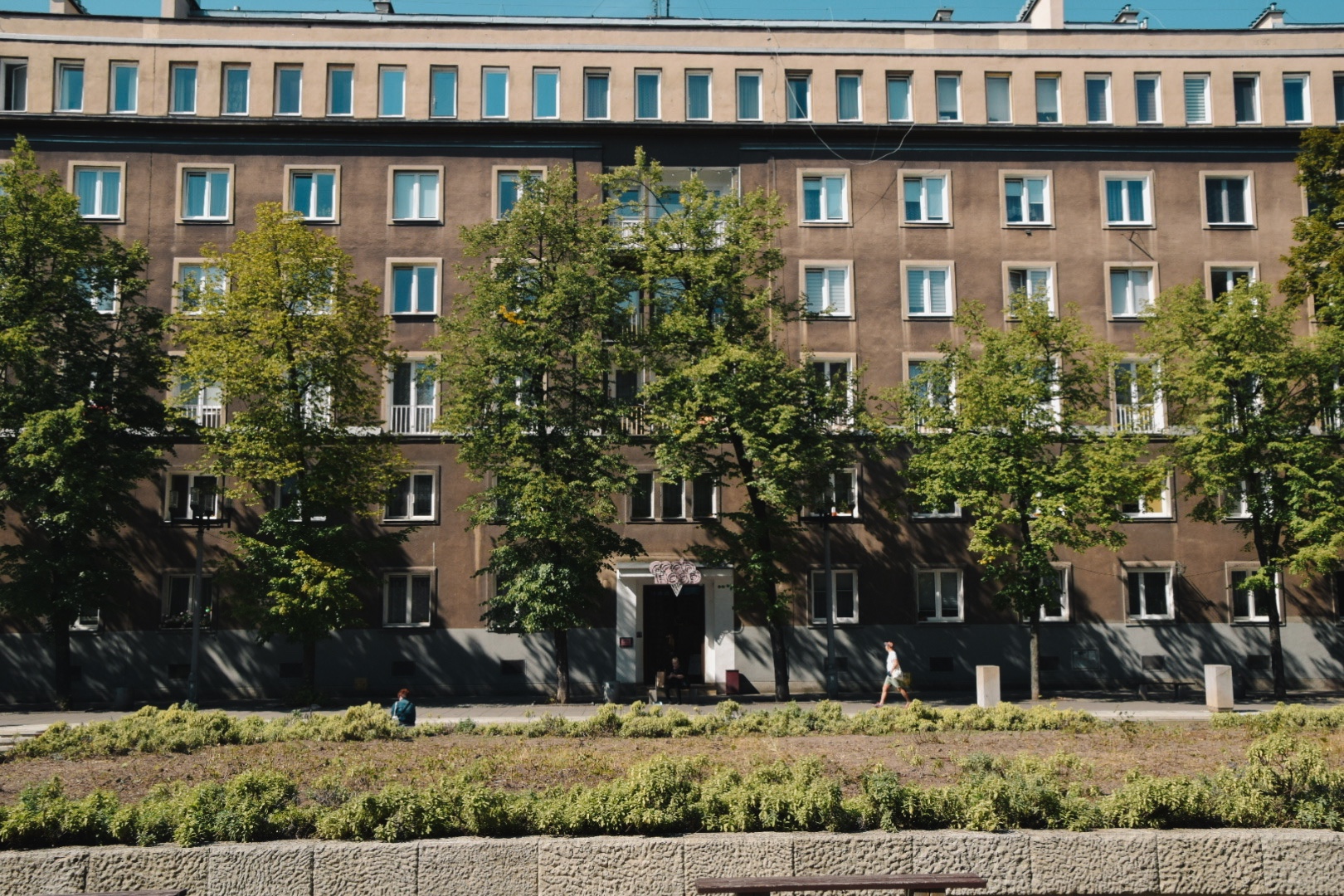
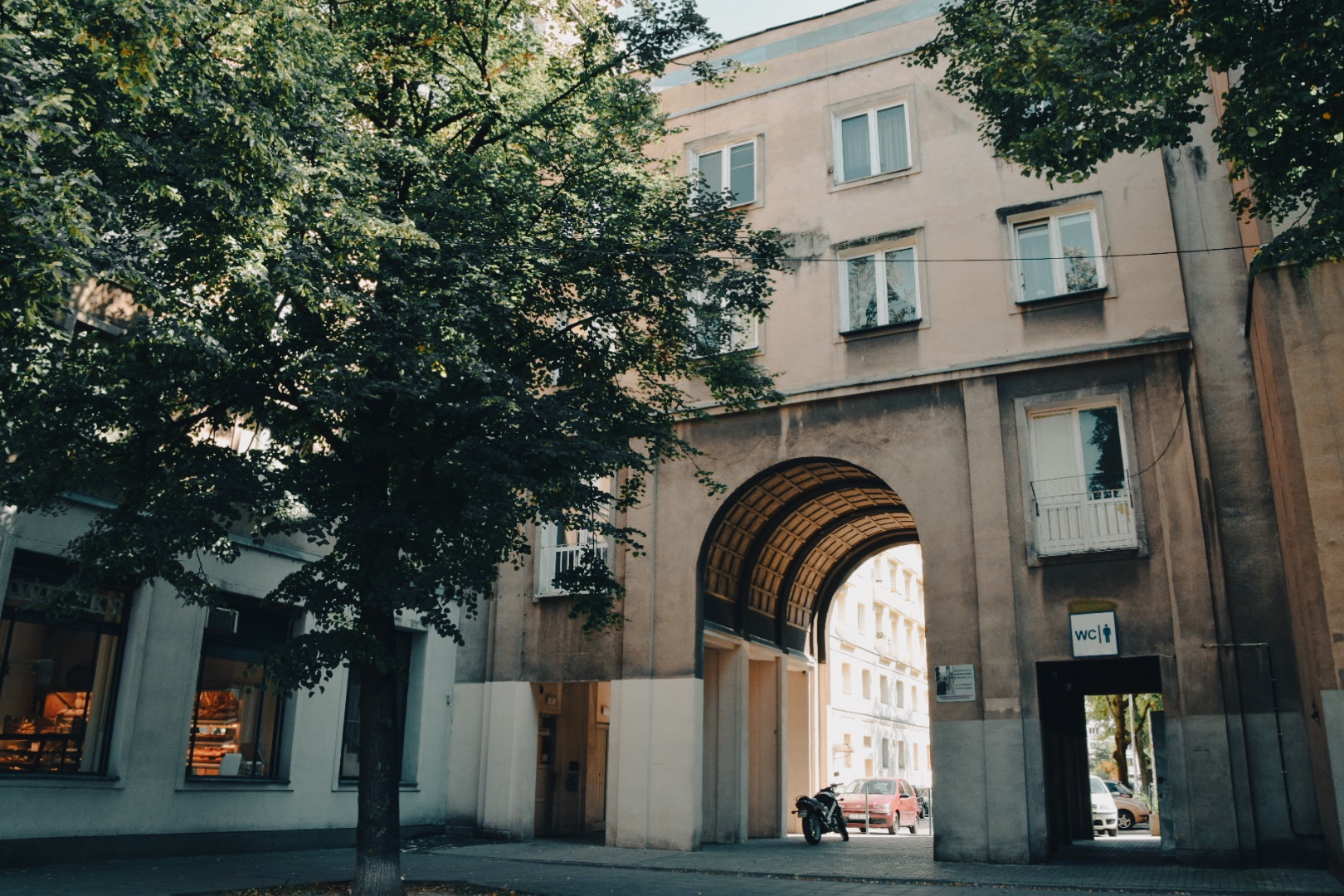
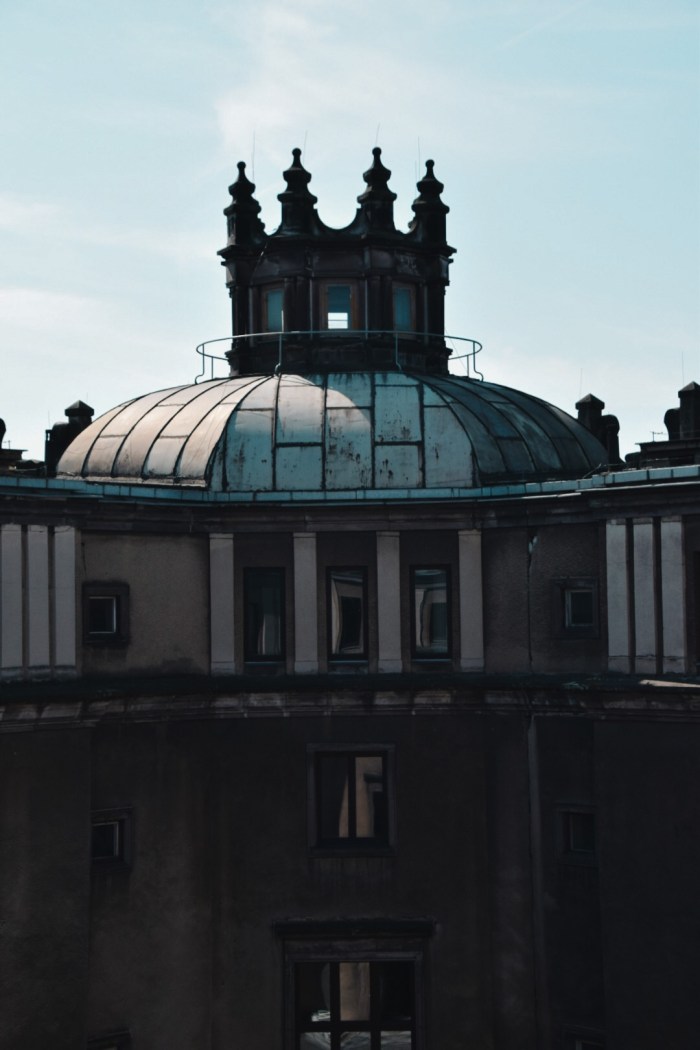
Forever fascinated by this specific time in history and driven by a (somewhat odd) sense of nostalgia for an era that wasn’t ever mine, I stumbled upon a tour of the district of Nowa Huta. Originally founded as its own city, it was once the Polish communist party’s answer to the very anti-communist city of Kraków. One of only two entirely pre-planned socialist realism cities ever built, a visit, whether for tourists but also for Poles, is like traveling back in time.

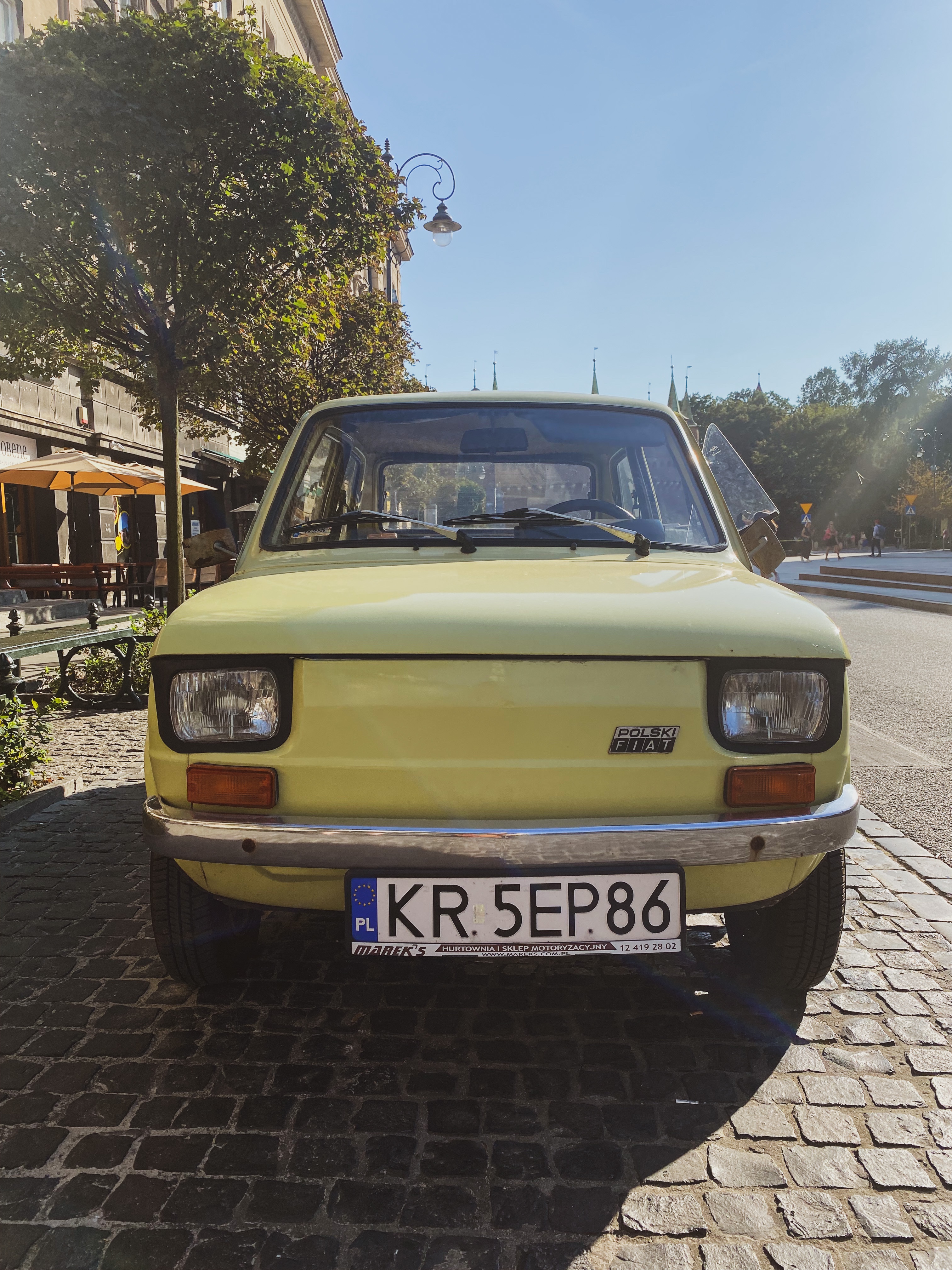
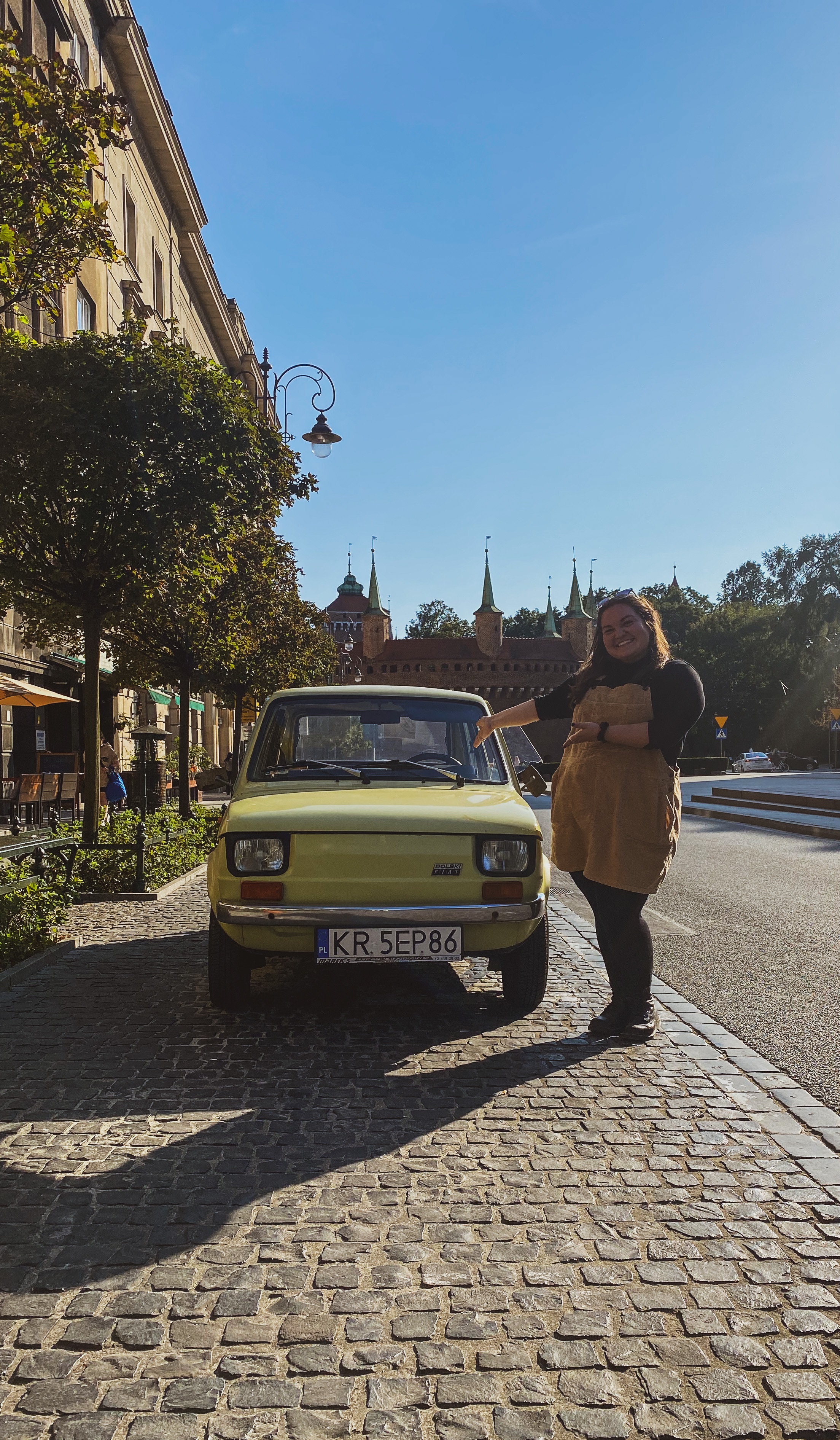
Even after the fall of communism, Nowa Huta had a bit of a bad rap throughout the 90s and early 00s, but is now slowly beginning to revitalize; eNHa Trip is one of those initiatives trying to breathe some new life into Nowa Huta by taking folks into its past. All of the profits from eNHa tours go into supporting community initiatives to help Nowa Huta thrive. Greeted by an authentic Fiat 126p aka a “Maluch” (which my mama told me she owned before she immigrated to the US) as my ride for the day and awesome guide Mateusz, I had a blast exploring a new neighborhood.

Some highlights included:

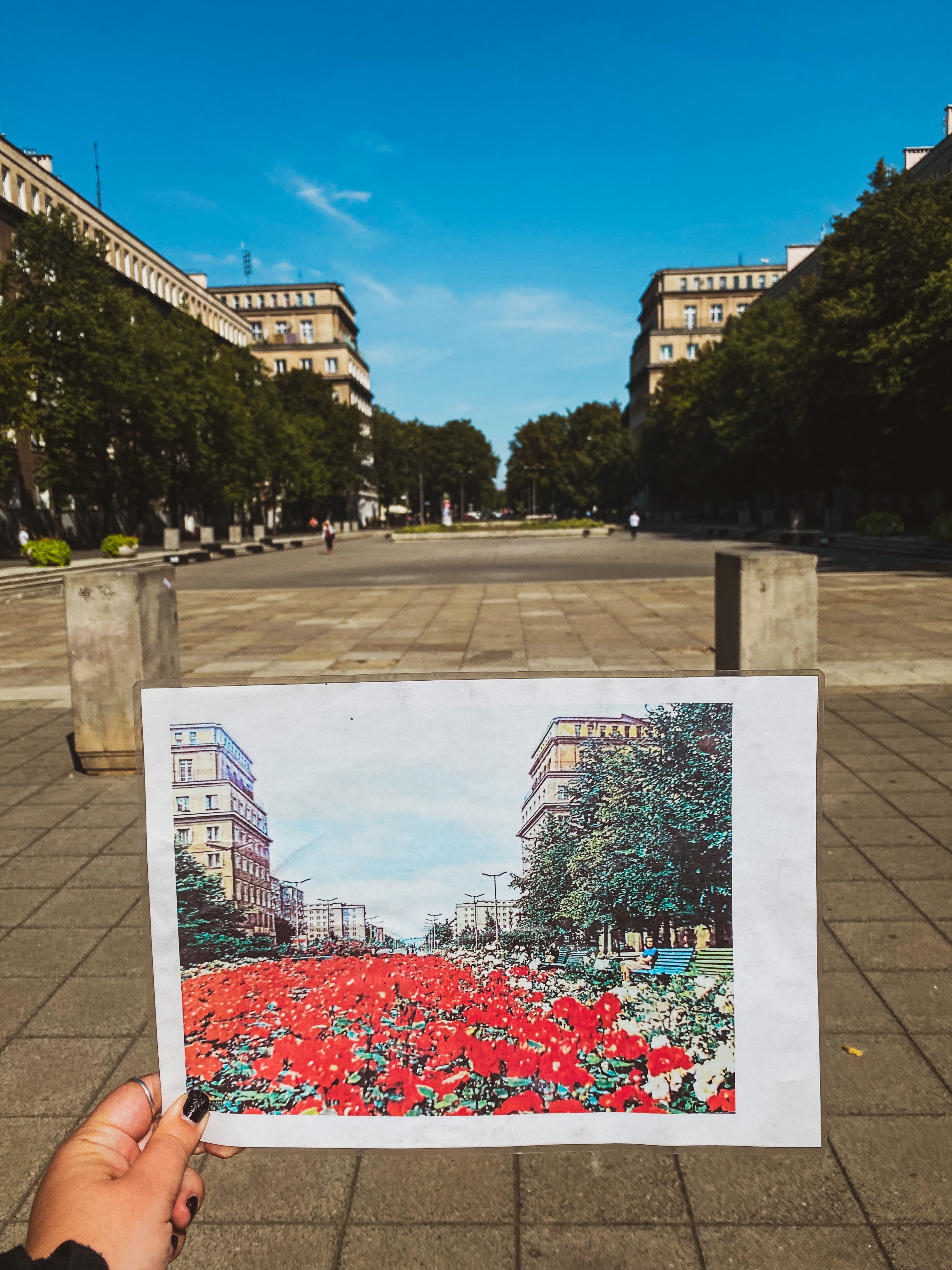
The Aleja róż, or Avenue of Roses, is just off the Central Square of Nowa Huta. The promenade, with its hundreds of roses, became a leisure spot for the locals of the proposed proletariat paradise. Unsurprisingly, it became the home of a giant monument to Vladimir Lenin in 1973. Also unsurprisingly, not everyone was happy with the monument. 1979 witnessed a failed attempt at blowing old Vladimir up. Although the powerful explosion had all the windows in the area knocked out, the revolutionary only lost a heel. The monument to Lenin was finally removed in 1989 after Poland’s free elections. Two years later, it was sold to a Swedish millionaire, and now it can be admired(?) in a theme park near Stockholm. While Vlad will almost certainly not make any kind of official return to Nowa Huta, I was pleased to learn that the city is working towards replanting the roses.

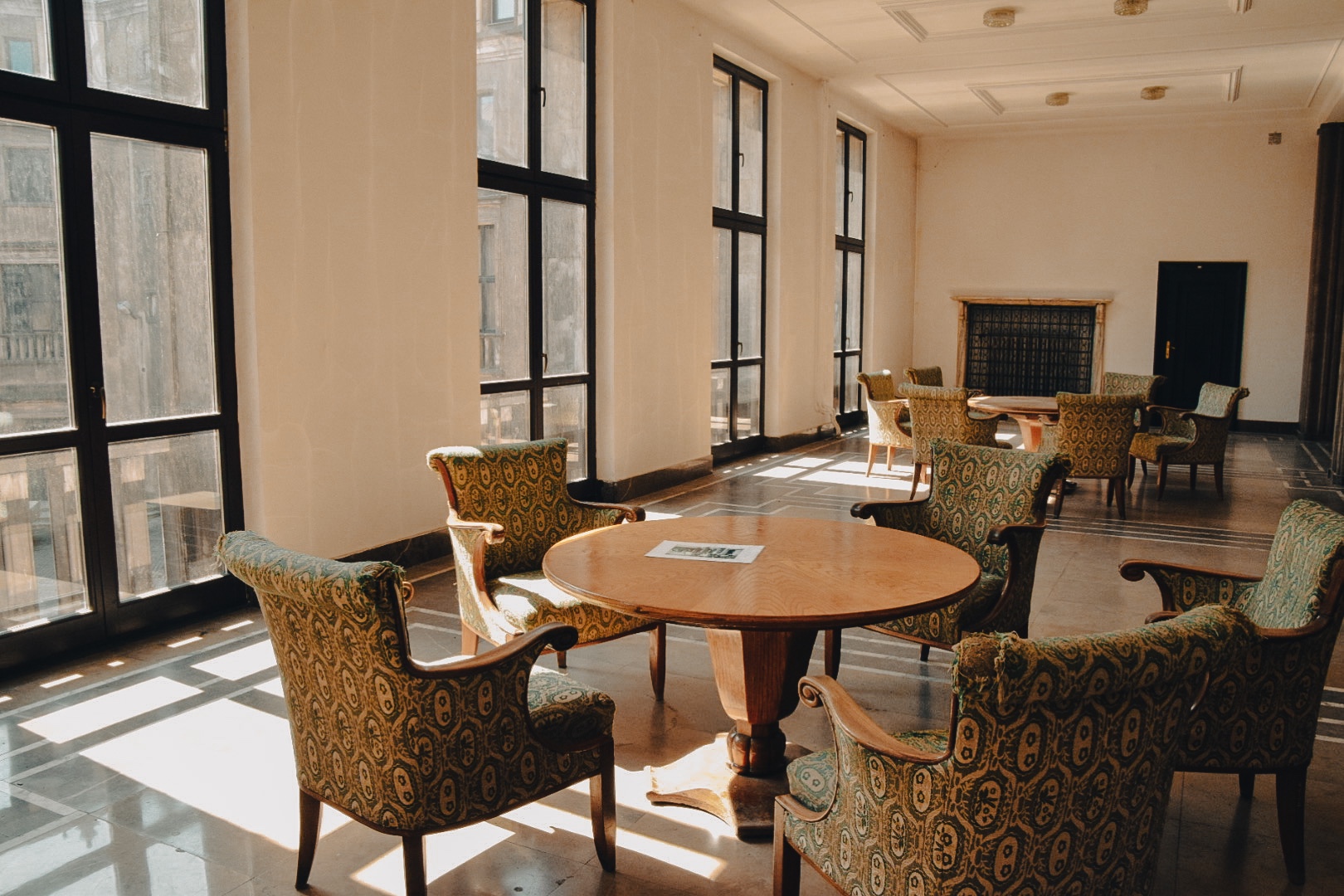
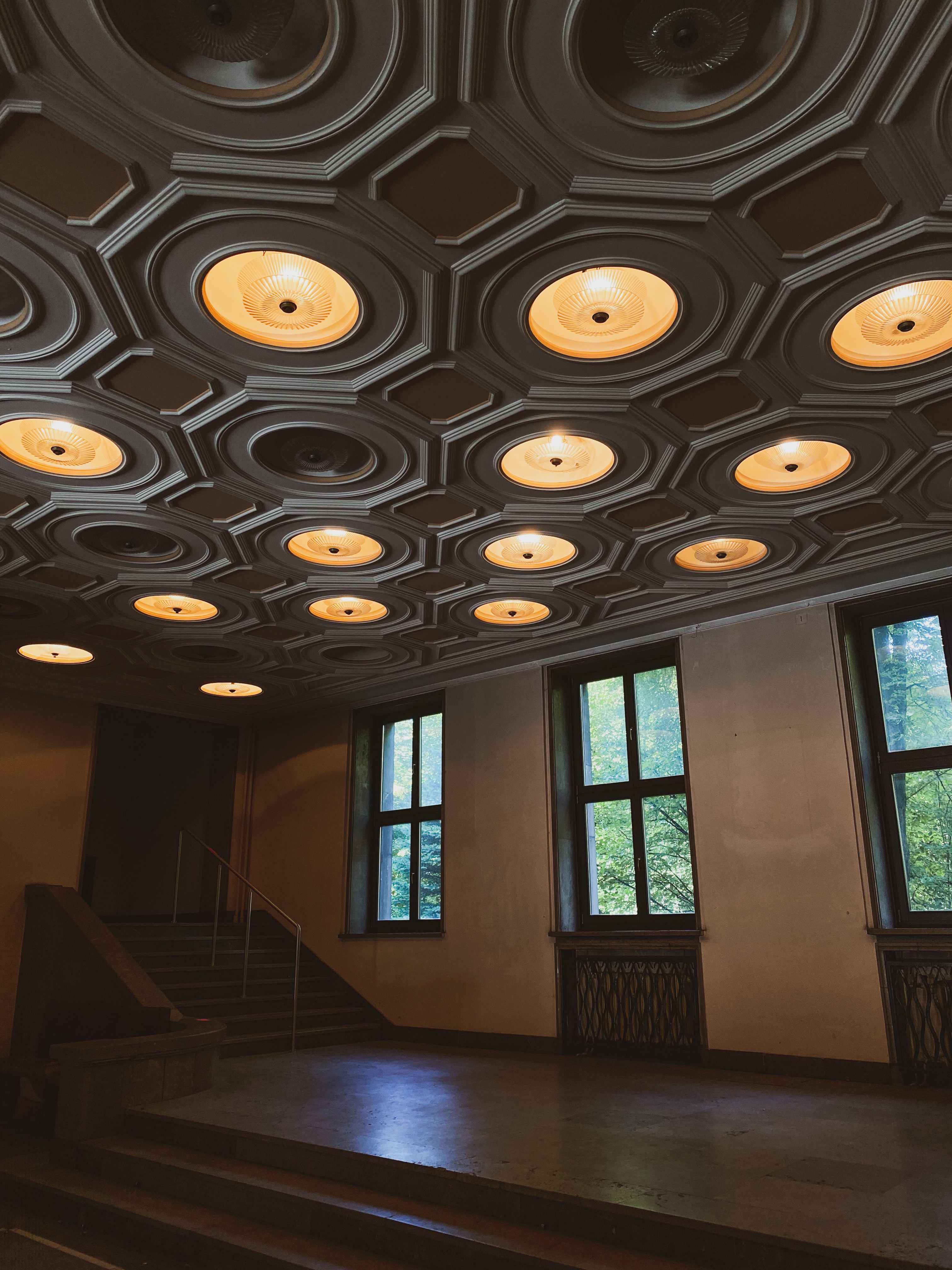
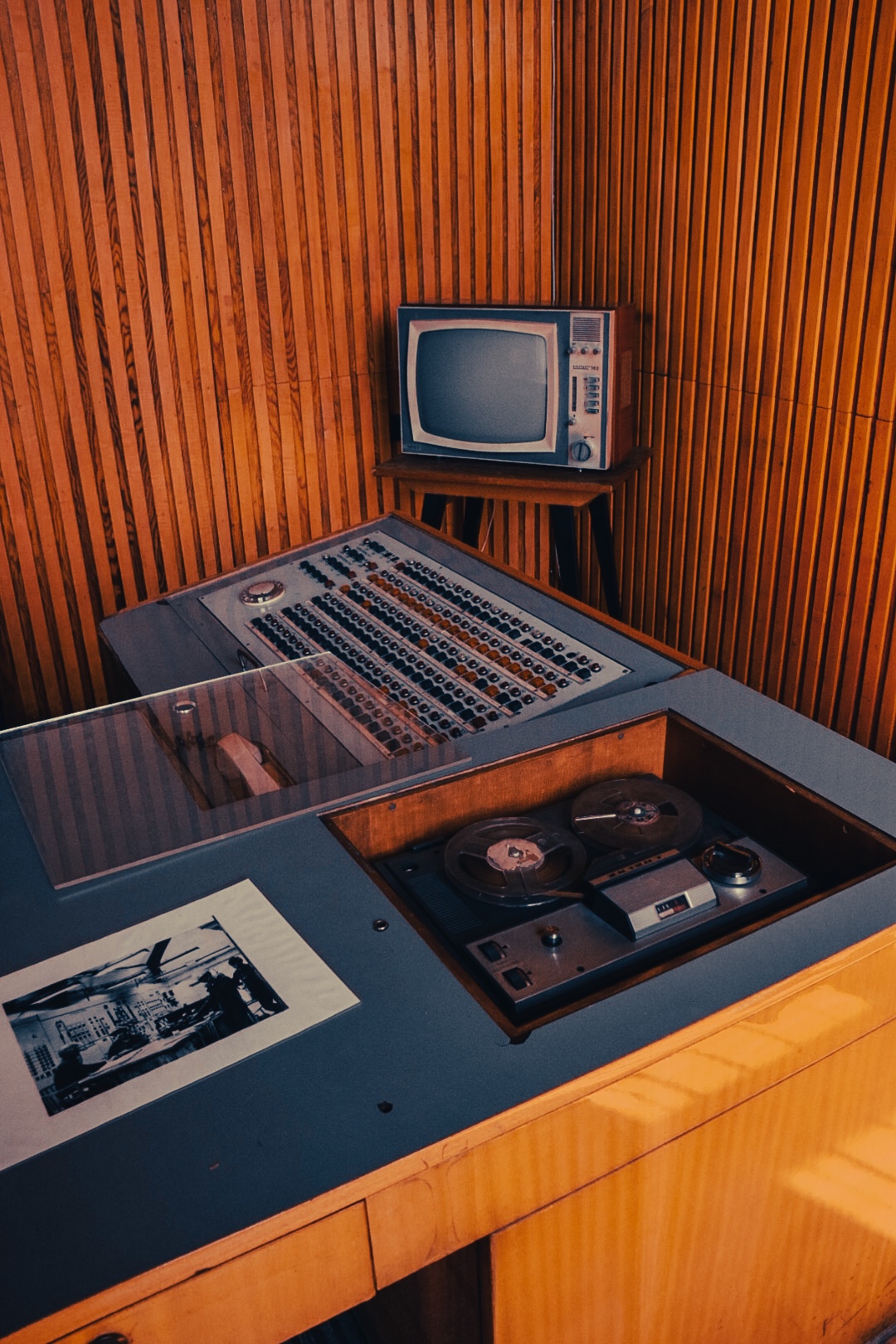
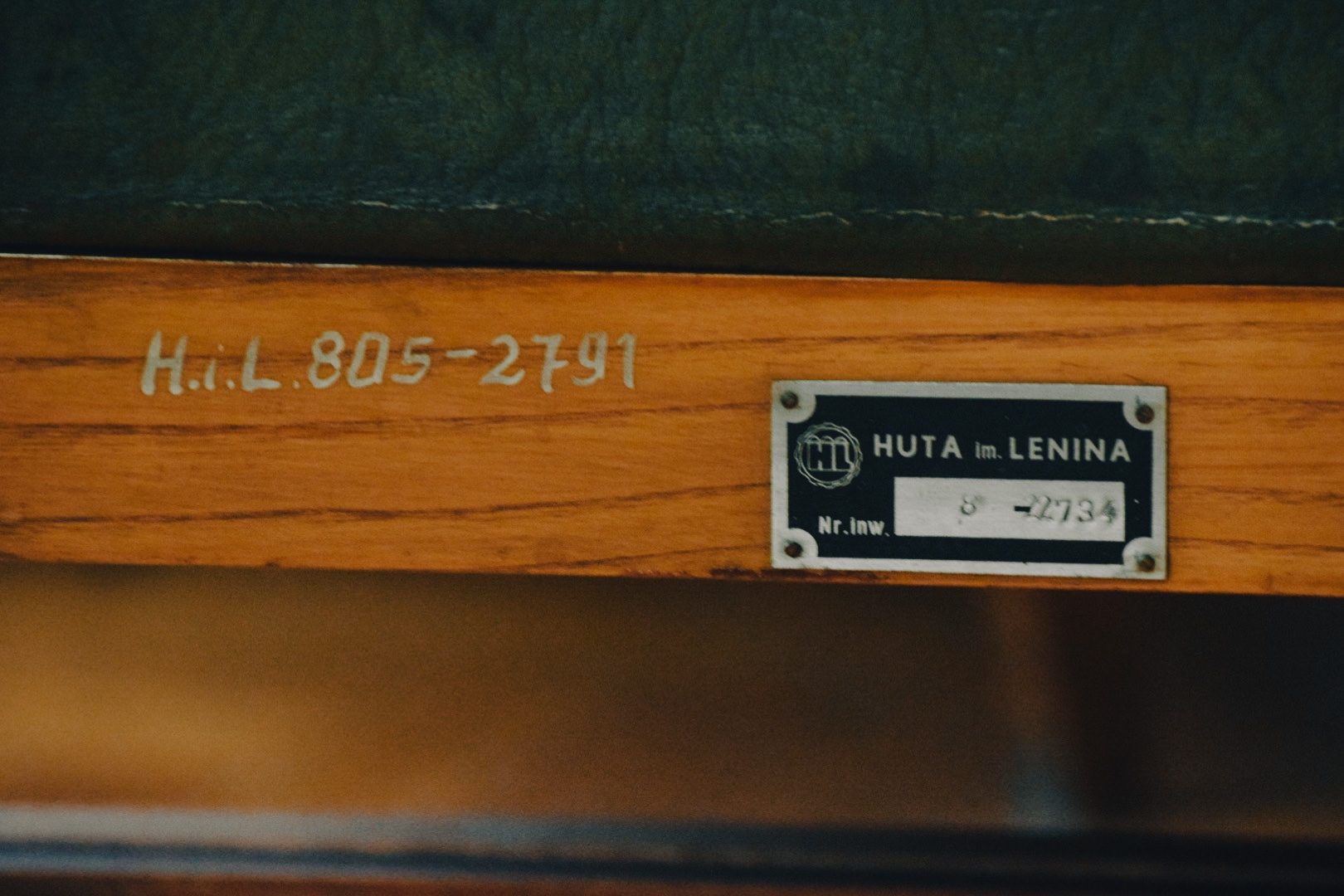
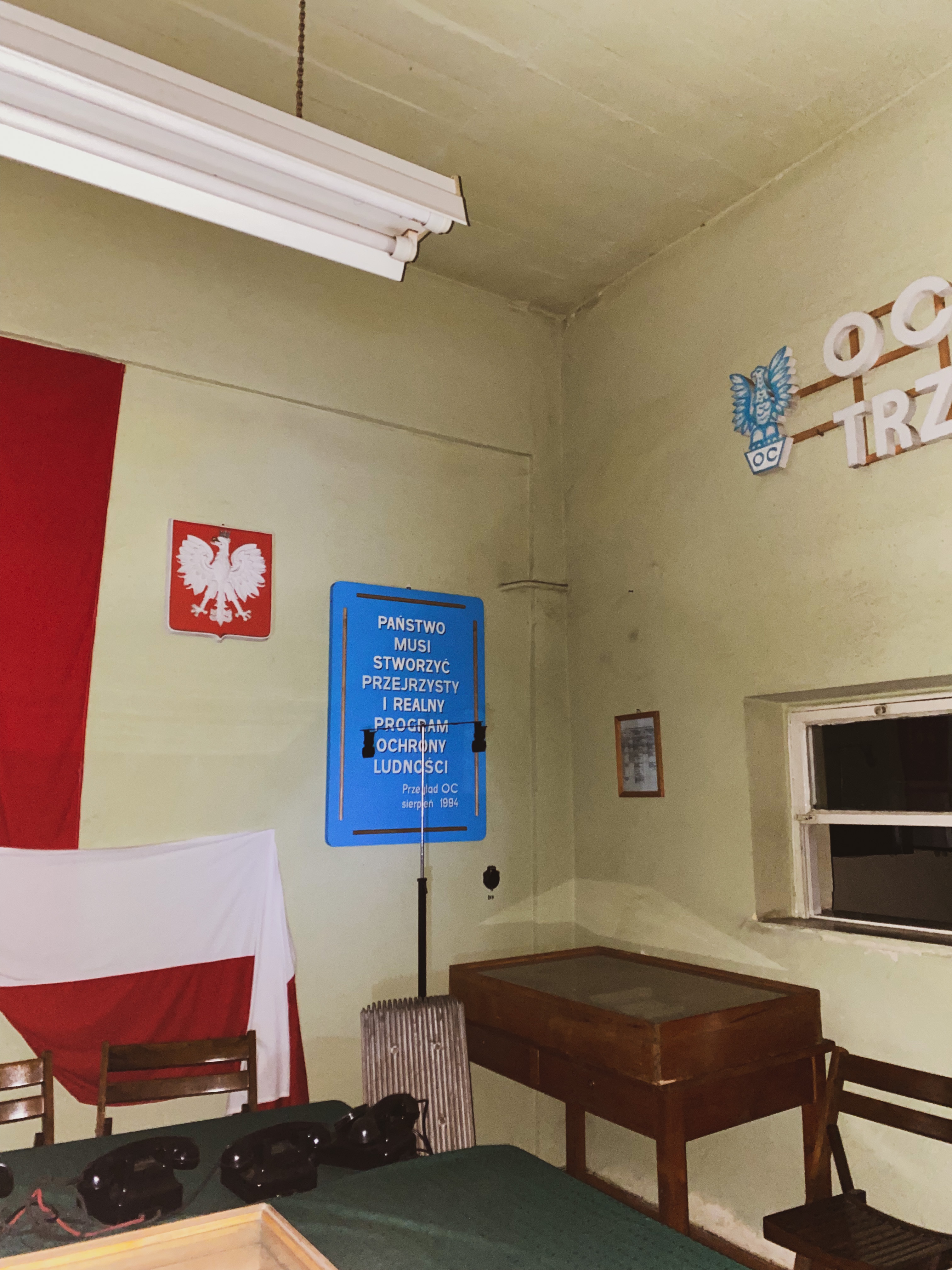
The main gates of Nowa Huta steelworks and the grand entrance to the Kombinat office buildings, together with the famous sign “Huta im. T. Sendzimira” (meaning “T. Sendzimir’s Steelworks”) which was altered after the fall of communism. Mateusz took me through some of the older administrative buildings and the fallout shelter– an experience made even more eerie due to the fact that lights in the underground shelter weren’t functioning, so we explored by flashlight.

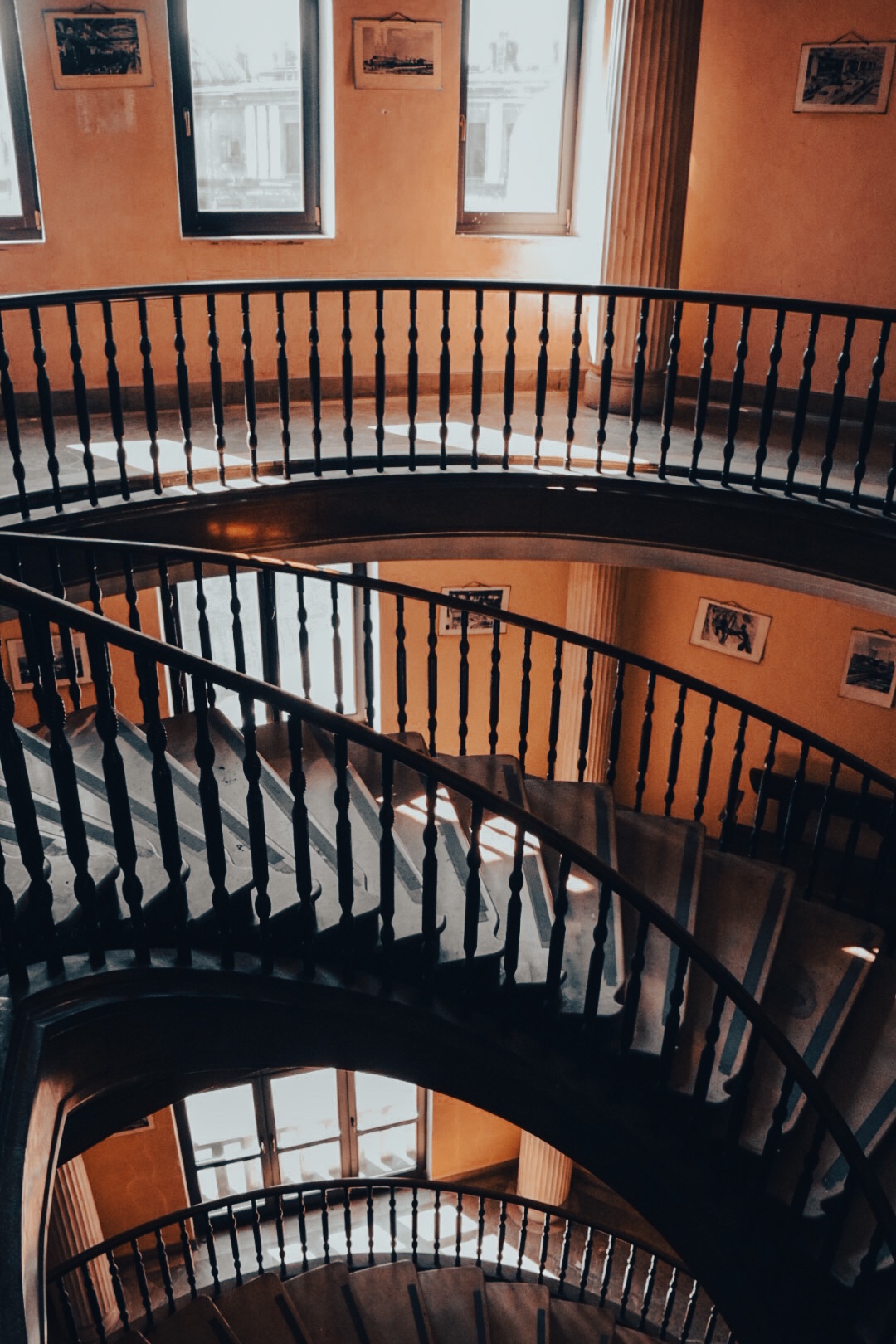
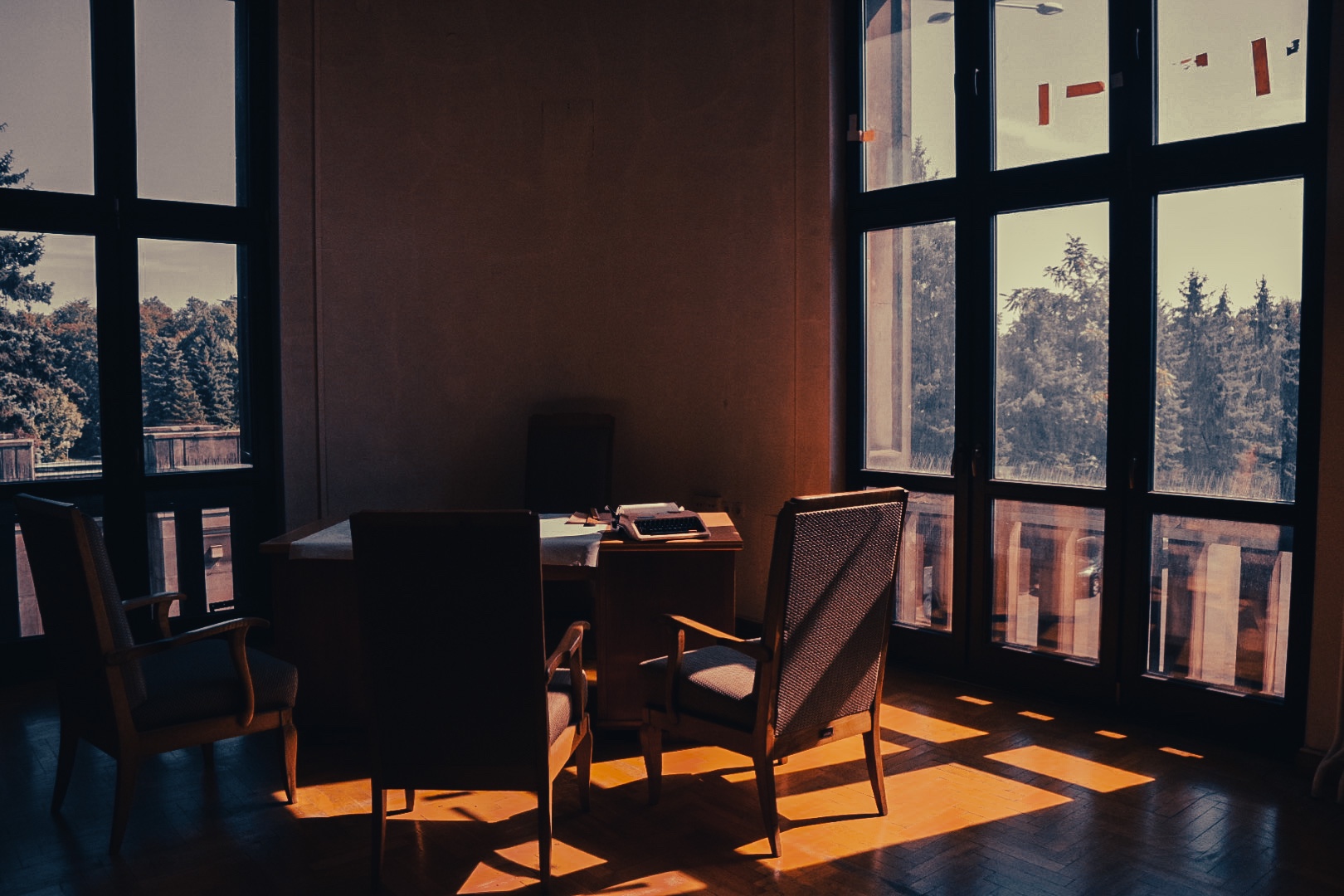
Admittedly, at face value, you may wonder what could be so exciting seeing administrative offices, some old paperwork or hearing recorded conversations of some of the guards from the factory- but as someone who leans heavy into nostalgia, it felt like walking through a movie set. Most of the rooms and halls are preserved perfectly and haven’t changed drastically since the 1950s, giving its visitors a time capsule they can walk through.

Riding in the Fiat 126p— The Fiat 126p is a (dare I say) cute little car, produced under a licensed agreement between Poland and Italian company Fiat. In the ’70s Poland was under the socialistic leadership of Edward Gierek, who was in search of a car that would suit the needs of the masses and motorize the country. The little Italian Fiat 126 was chosen as a model, the successor to the 500 (Cinquecento) and assembly of the Polish version began in July of 1973.

Also called a Maluch (Polish for “little one), despite its ridiculous small size, it was supposed to be used as a family car and could fit up to 4 people. The Maluch gained a lot of popularity in Poland, because was the only available and affordable choice for regular working families. While iconic, these are definitely not zooming around the roadways of Poland like they used to- it’s not that common anymore. Car collectors and auto enthusiasts (and apparently Tom Hanks) predominantly celebrate the car and often showcase them at festivals around the country. Although no longer quite practical, this nostalgic, adorable auto has earned its place in the hearts of many Polish generations.


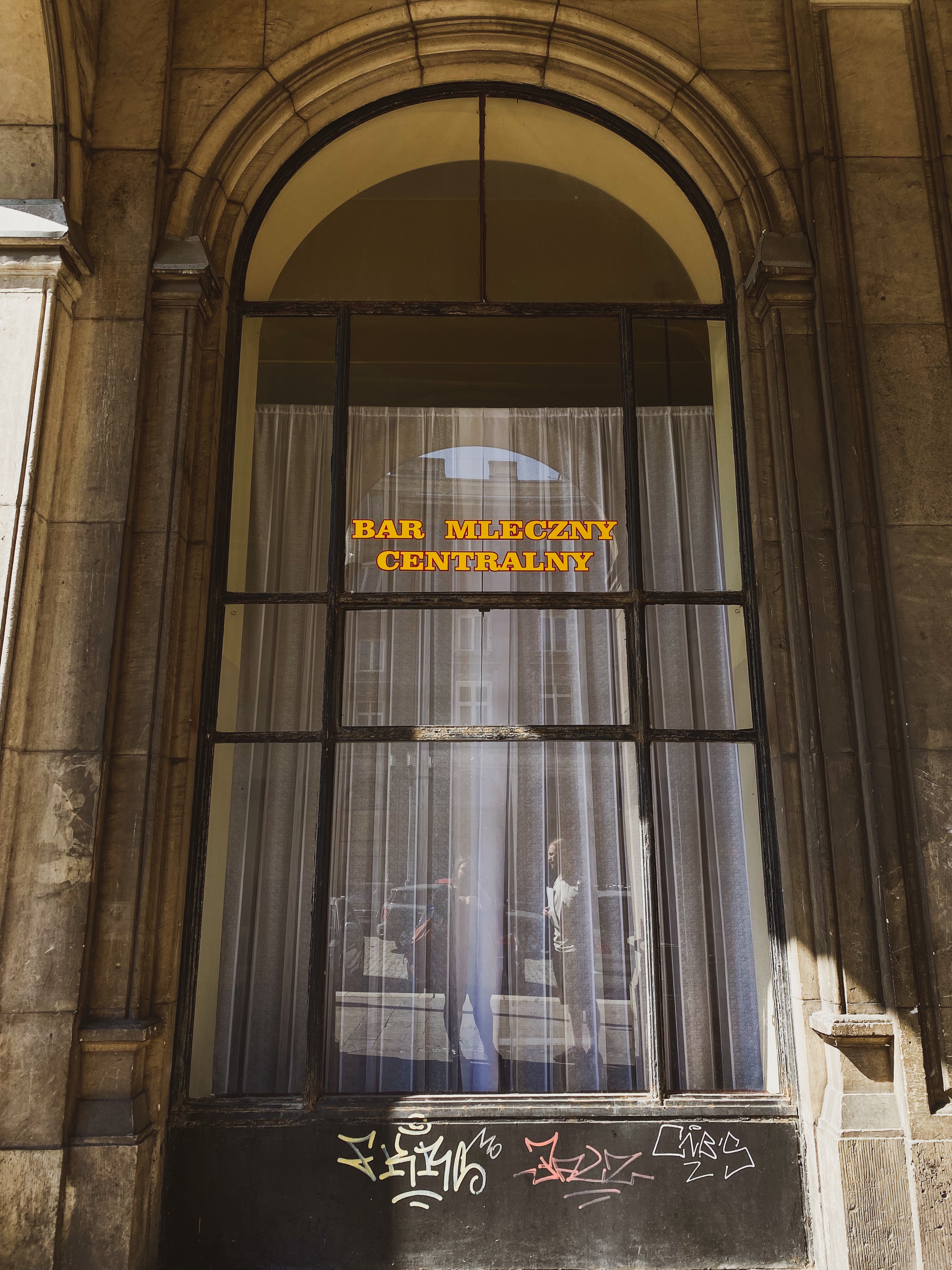
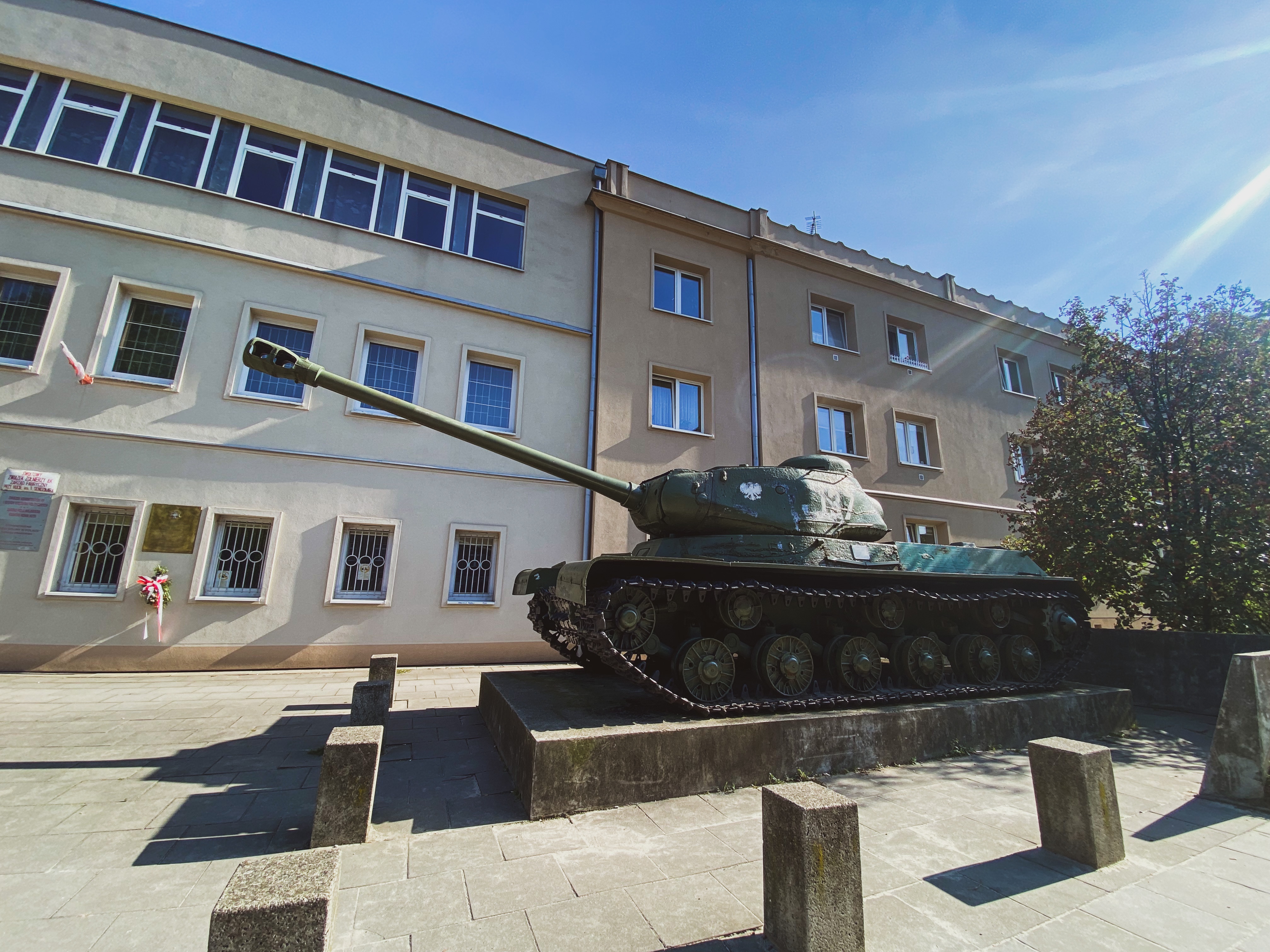
We grabbed lunch at a very popular bar mleczny (milk bar) and of course, no tour of Communist-era Europe would be complete without a photo-op with an original WWII military tank that saw battles on the Eastern front. We ended the day at St. Mary’s Church of the Lord’s Arc – the first church built in Nowa Huta after an arduous campaign by the locals, as the original communist town had no churches at all. It later became a symbol and rebellion base against the socialist regime.

Thanks to my Polish roots/stories from my family, the day became a quirky and real conversation of what life looked like for Poles after the war when they fell behind the Iron Curtain and what we both thought of Polish society today as a result of this particular history. If you’re even remotely curious about the PRL-era or doing something a little different during a stay in Kraków, I can’t recommend it enough!

For more information about the prices and types of tours, be sure to check out the Nowa Huta Tour website.

Kraków for First-Timers

Kraków (sometimes referred to or written as Cracow) is one of the most beautiful cities in Poland. Unlike Warszawa, it wasn’t destroyed during WWII, so it’s preserved much of early Polish culture. You could easily spend a week here and still not discover everything it has hidden in its charming Old Town or surrounding neighborhoods.

It’s such a lively city, filled with young artists, along with old Polish babcias, priests and nuns. You’ll find the familiar (if not than definitely soon-to-be familiar) face of St. John Paul II, Kraków’s most famous son. You might meet a dragon along the way to the castle. You might share a beer with some university students while belting out some karaoke being backed by a live band (I’ve done this before and it’s awesome) or a quiet moment along the Wisła.

If you have limited time in one of my favorite cities, have no fear, your (hopefully) favorite millennial babushka is here. I will be the first to admit, I’ll be a bit biased when it comes to this city, but I honestly think you can’t go wrong in Kraków, especially if you love history, art, and aren’t afraid of a little (or a lot) of beer. 

So, enjoy, moi drodzy!

Stare Miasto (Old Town)

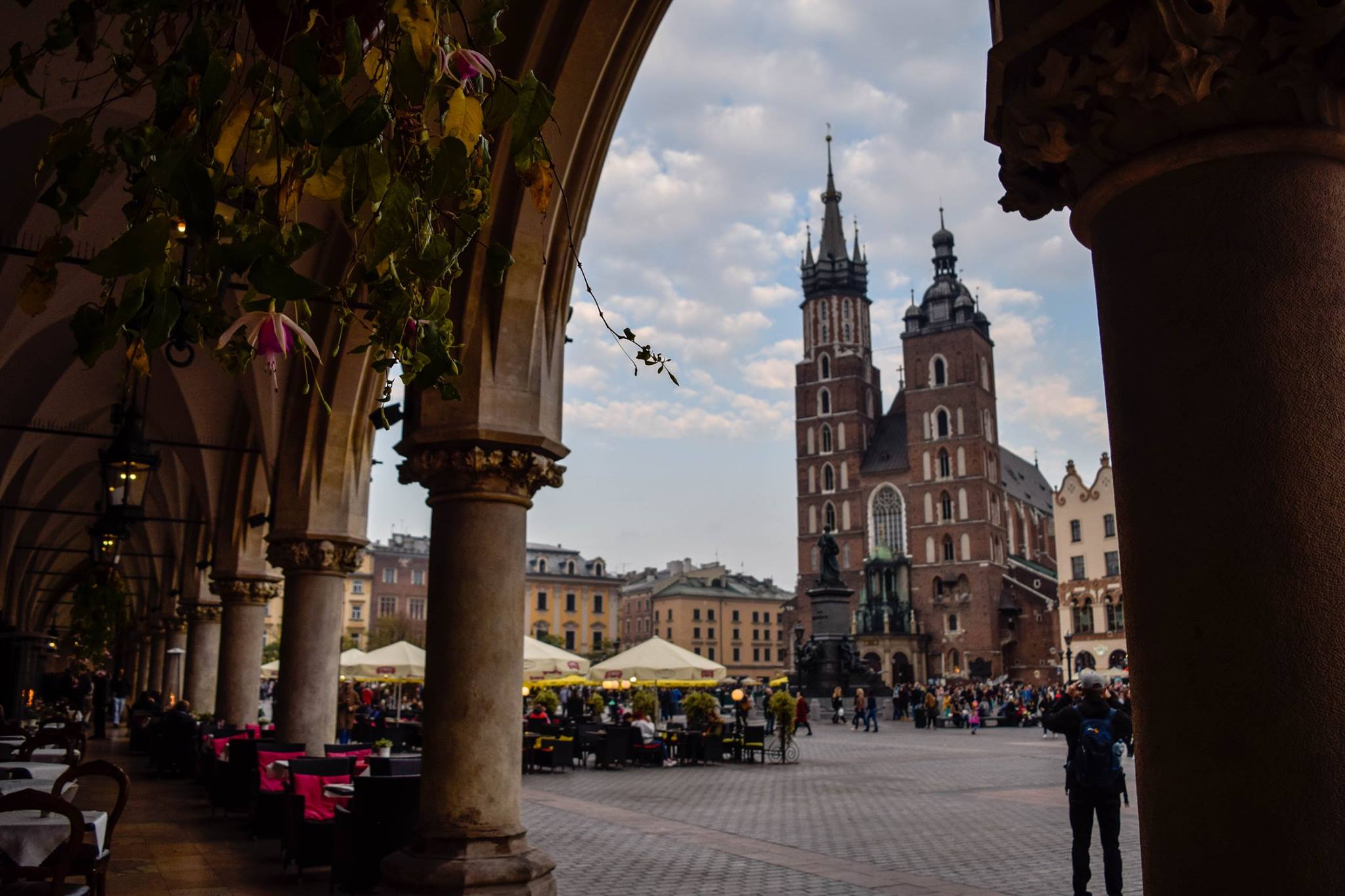
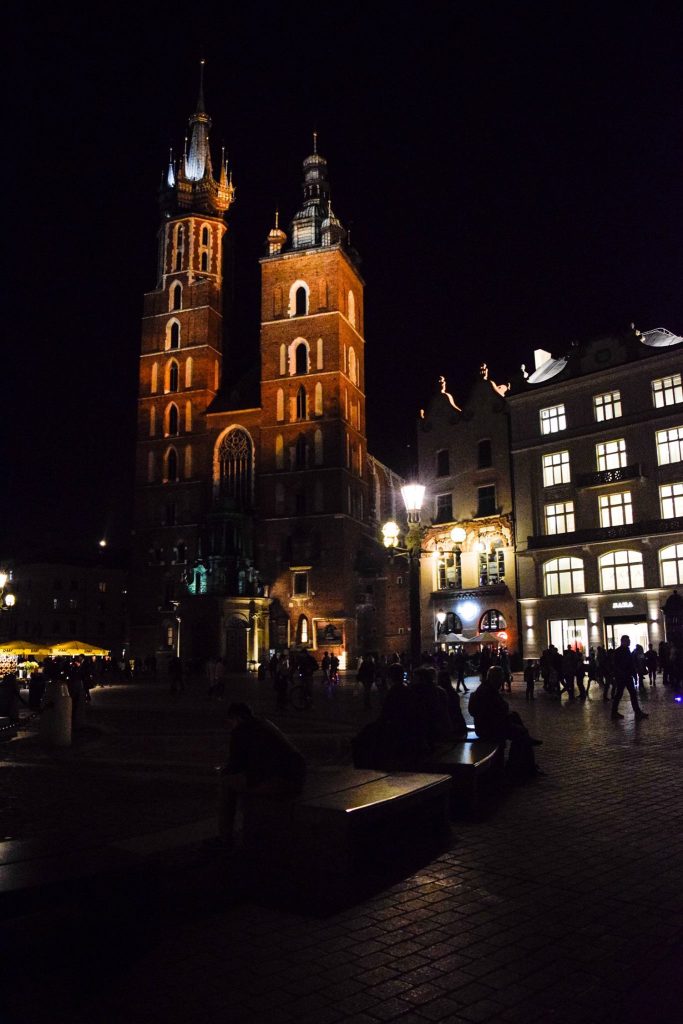
A view of St. Mary's Basilica from the Sukiennice Cloth Hall. Fall 2017.

As every charming old European city, the Stare Miasto is a must. Yes, there’s definitely a higher concentration of tourist traps in terms of restaurants and souvenir shops, but that should not deter you from wandering the quaint and colorful streets. One of the best things about Kraków’s Old Town is that it is extremely walkable and has most of the “must-see” cultural sites, meaning you can either have a more relaxing day, stretching your visits of the sites throughout with breaks for some tasty treats or drinks, or hit them up in quick succession pretty efficiently if you’re in a time crunch.

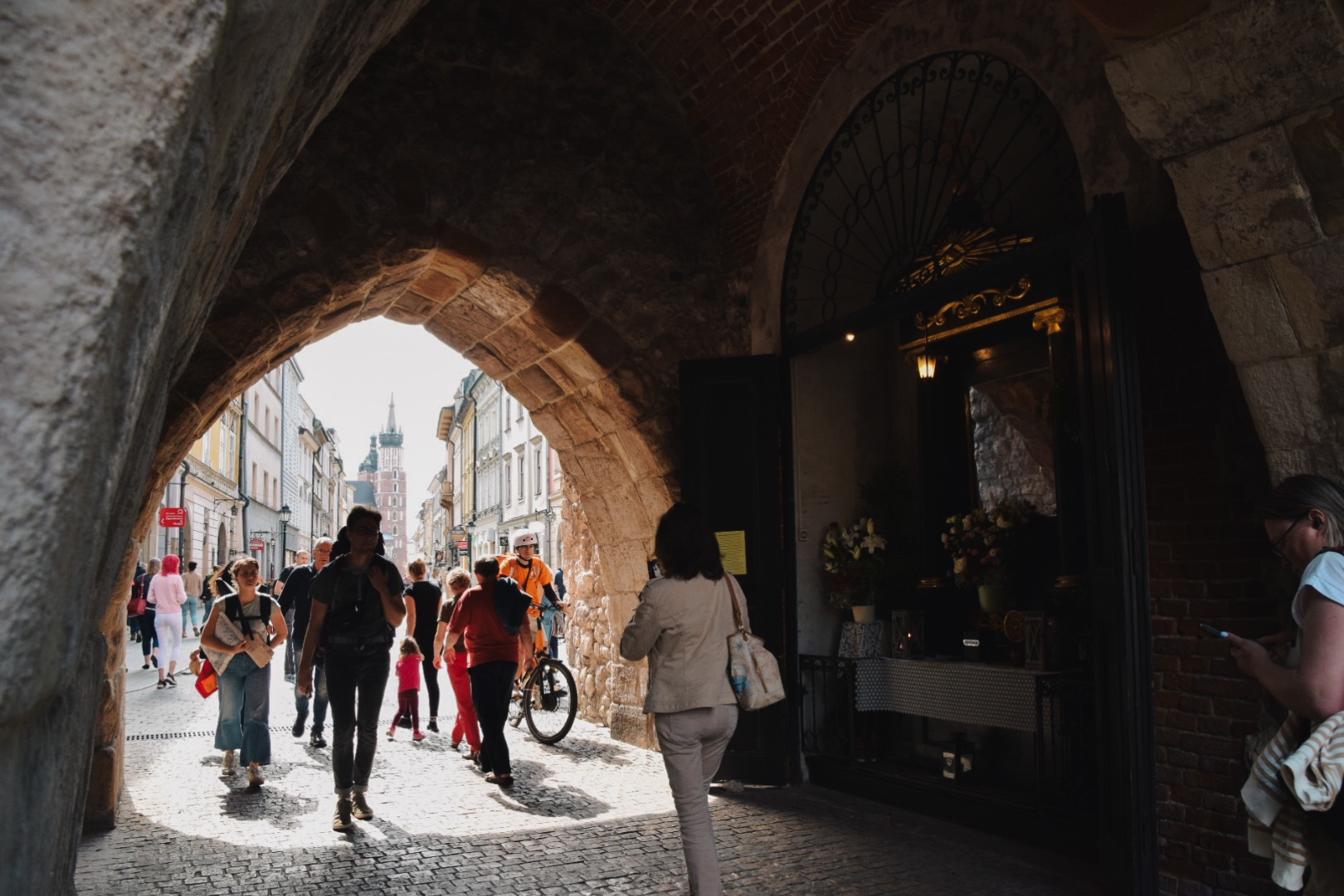
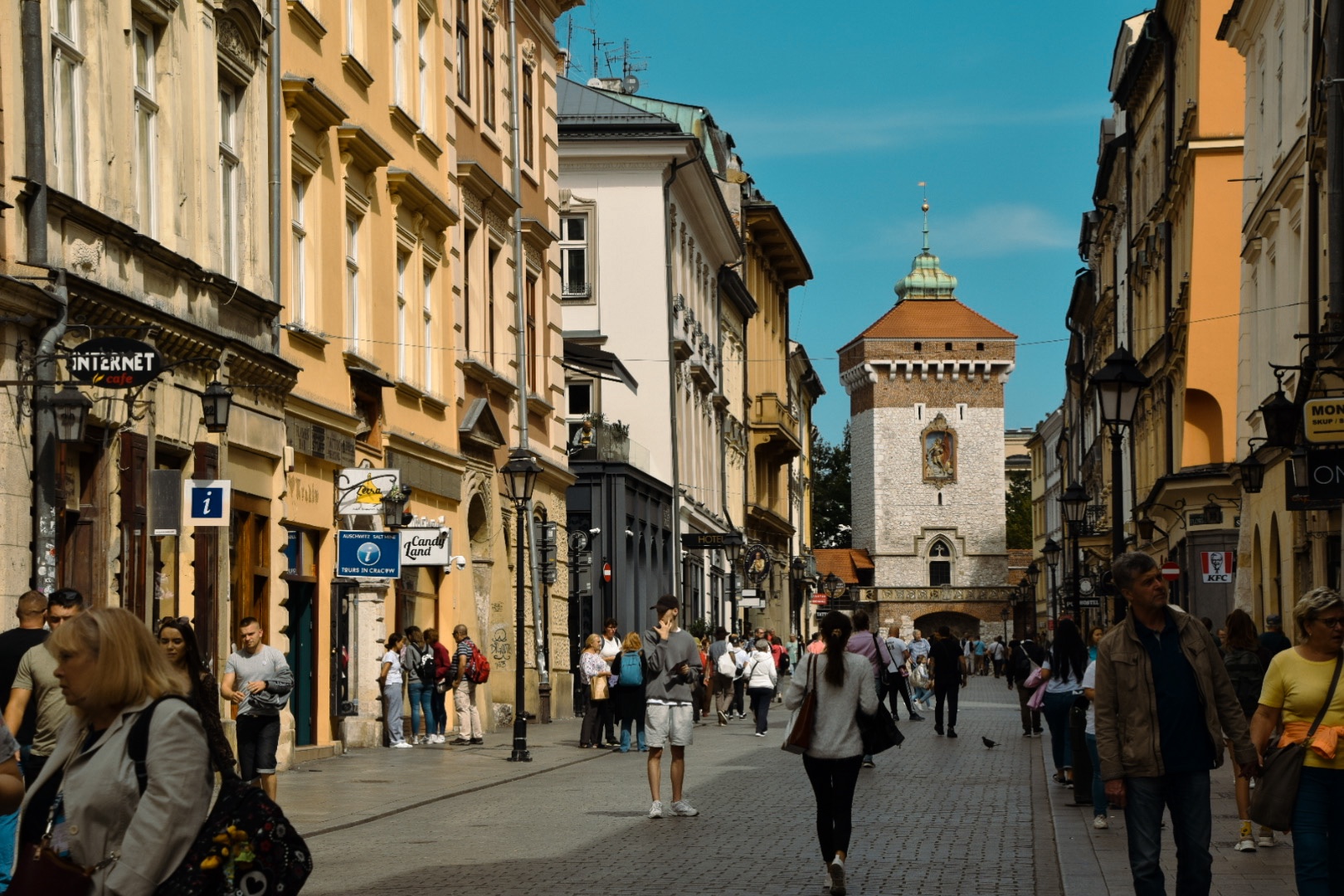
  • Szlak Królewski and Brama Florianska (The Royal Route and St. Florian’s Gate): Brama Florianska welcomes tourists and locals alike to the city’s picturesque Old Town. Marking the beginning of the Royal Road to the Wawel, it is the same gate that welcomed kings, queens and princes, foreign envoys and distinguished guests, parades and coronation processions centuries ago.
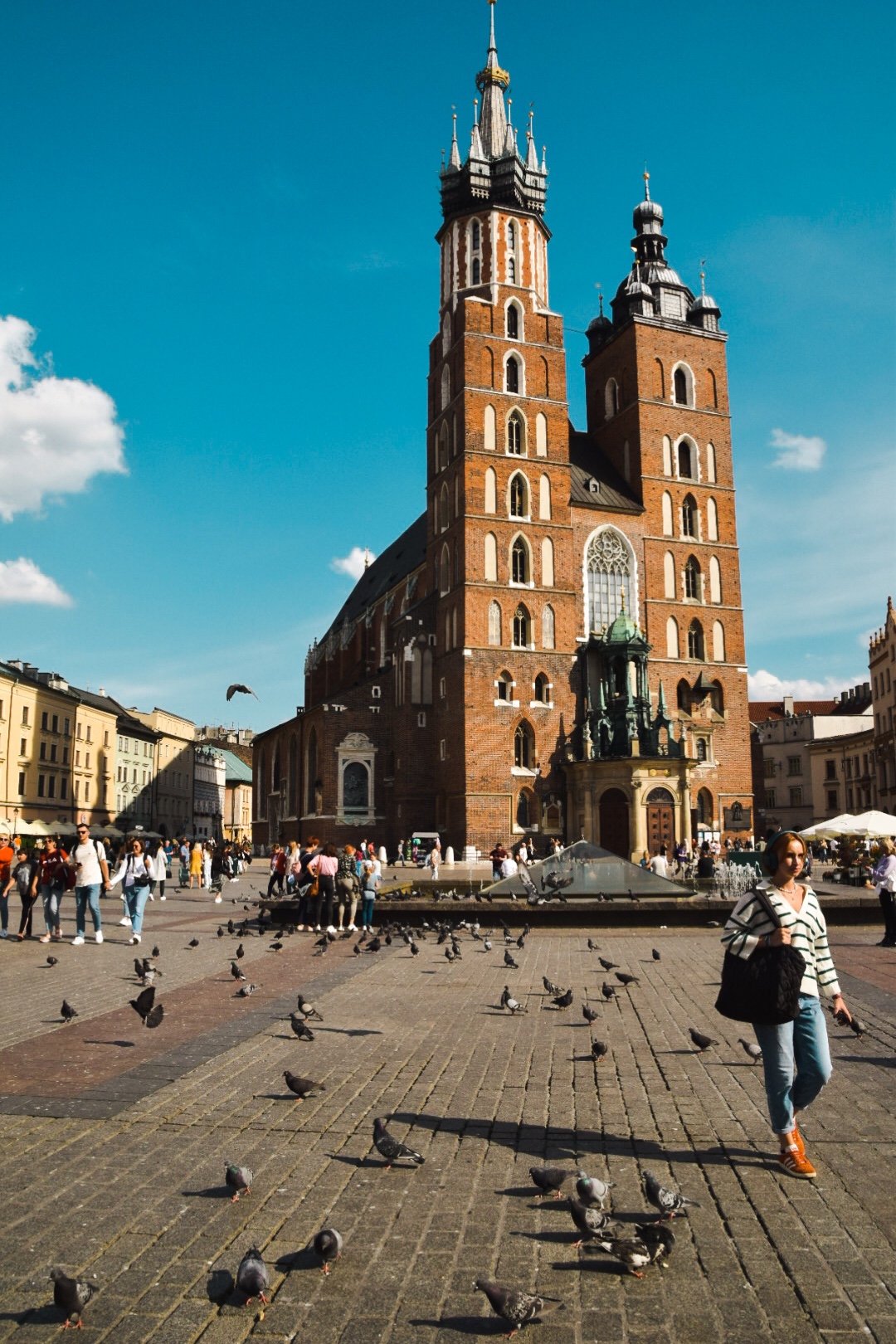
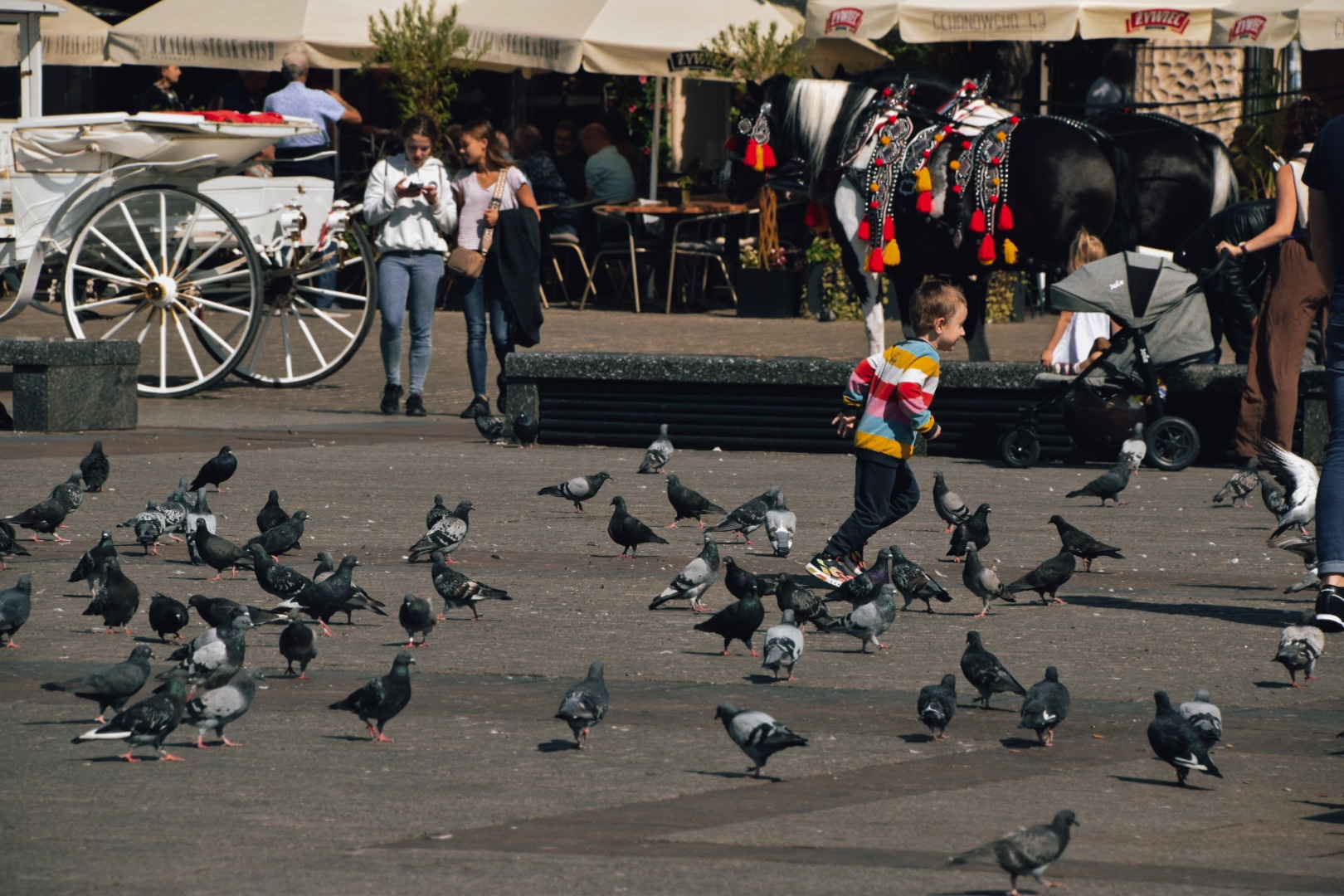
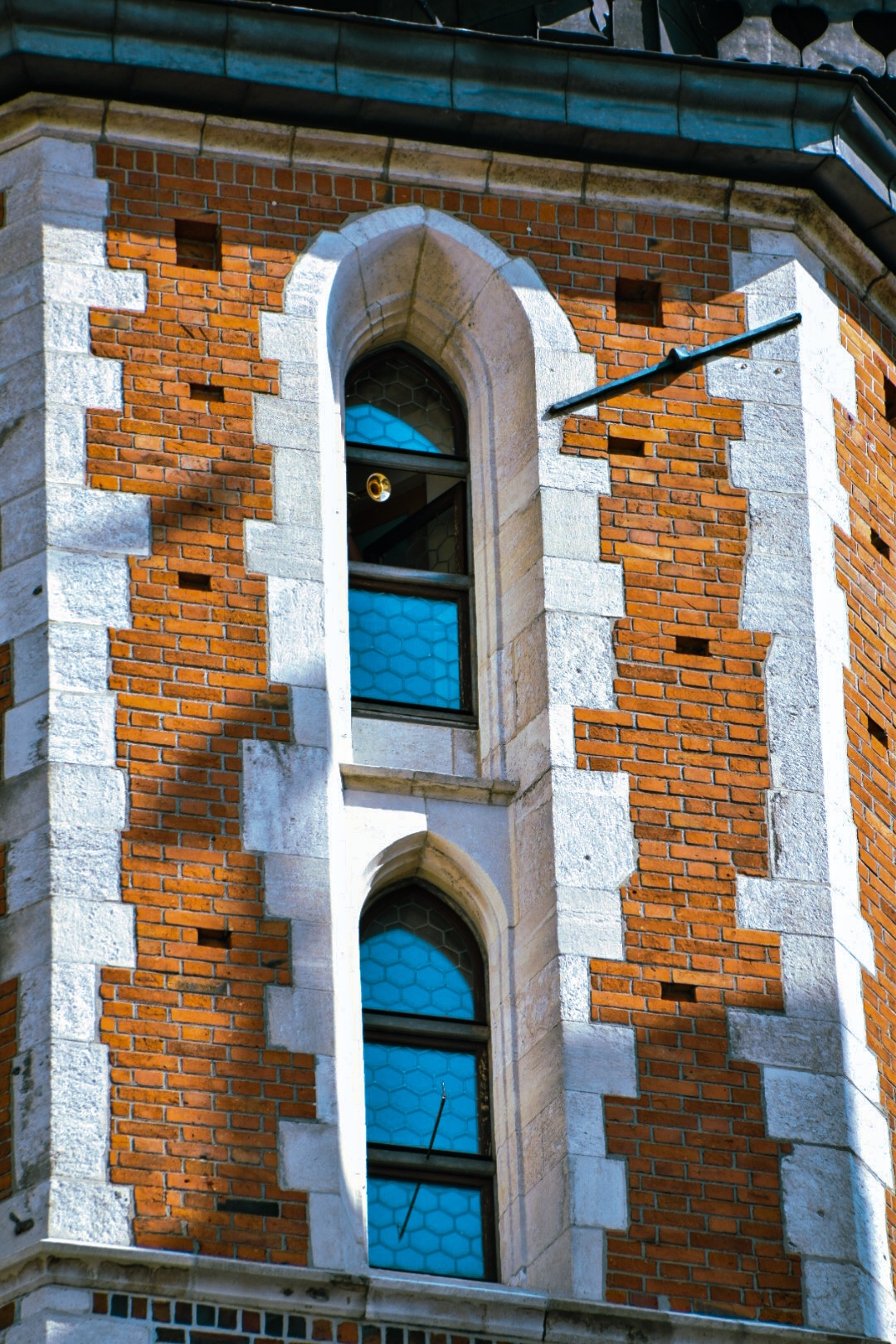
  • Rynek Główny (Main Square): As the heart of the city, the Rynek is the largest medieval square in all of Europe. I find it absolutely beautiful in the summer, filled with tourists on walking tours (definitely fit one in for your first trip- it sets you up for success on navigating around the city!), horse carriages, street musicians, locals enjoying some obwarzanki, drinks, or ice cream, and pigeons galore. In the spring and winter months, you’ll find the seasons’ respective Easter and Christmas markets often with stands selling artisanal crafts and fresh street food. Stick around during the hour mark to hear the bell’s toll and the famous Kraków trumpeteer play the “hejnał krakowski” from the bazylika.
  • Kościół Mariacki (St. Mary’s Basilica): Speaking of the basilica, even if you are not Catholic/religious, I would argue it’s worth a look in. The 14th-century, gothic church is the gem of the main square with its stain glass windows and gilded interiors. This UNESCO World Heritage site is particularly famous for its wooden altar made by Wit Stwosz and murals painted by leading historical painter, Jan Matejko. The blue ceilings were especially striking the first time I saw them, reminding me of the blue that Catholics may associate with Jesus’ mother, Mary. If you’re ever in the mood for some contemplation, I’d recommend stopping in- you may be lucky and catch one of the local or visiting choirs singing.
  • Sukiennice (the Cloth Hall): It used to be the mecca of all trade in Kraków, and even Poland. It’s very touristy now, but it shouldn’t take you more than half an hour to walk by each stall, see what they’re selling and perhaps barter for a better price (probably won’t work though). In general, Sukiennice would be a good spot to grab some souvenirs, but admittedly they’re basically the same price as everything on Florianska Street.
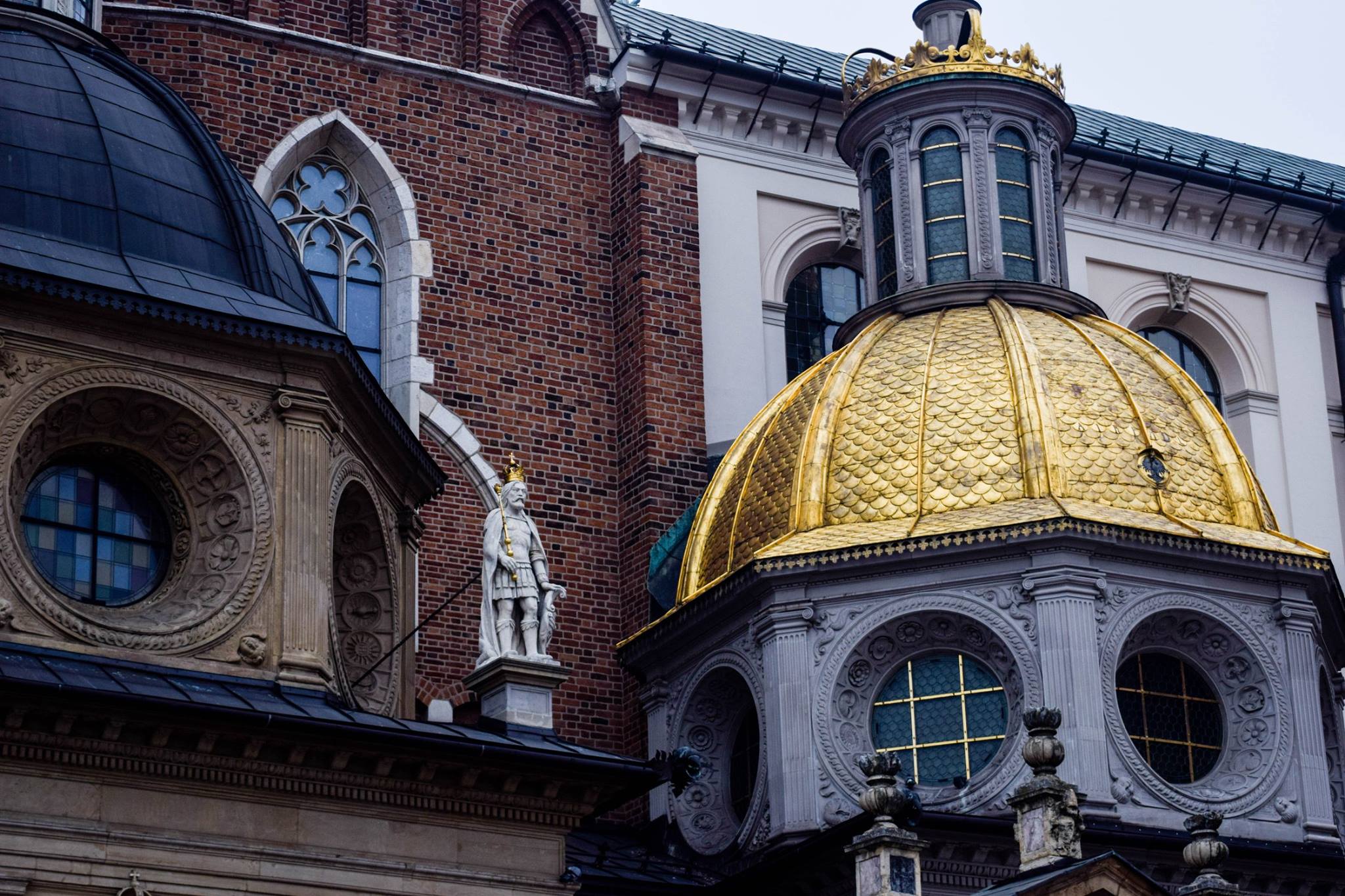
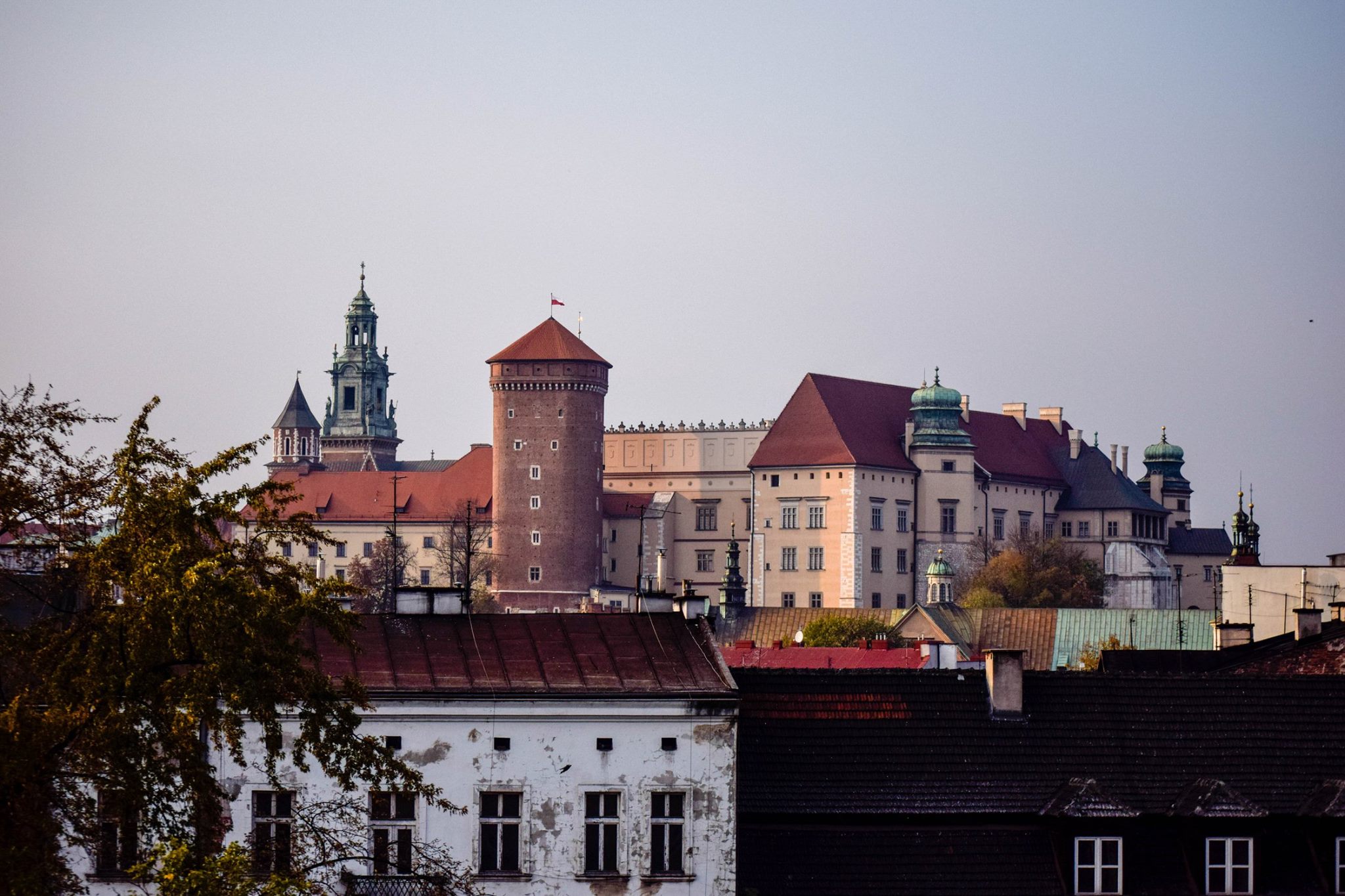
  • Zamek Wawelski (Wawel Castle): The Wawel Castle is perched on top of a hill bearing the same name immediately south of the Old Town. It is by far the most important collection of buildings in Poland. A symbol of national pride, hope, self-rule and not least of all fierce patriotism, the Wawel is the crown jewel of Kraków’s architectural treasures and required visiting for Poles and foreigners alike.

Kazimierz (The Jewish Quarter)

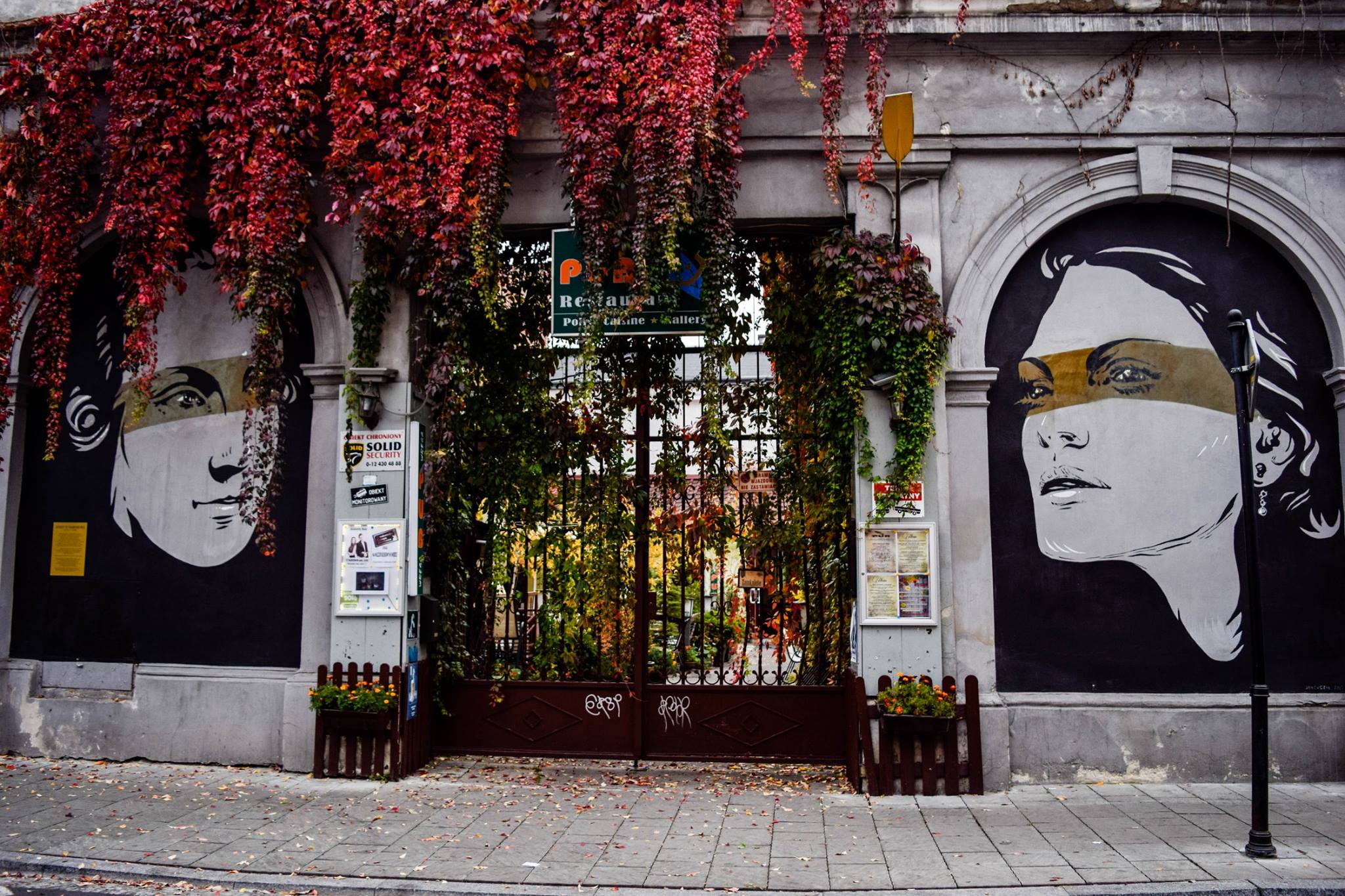
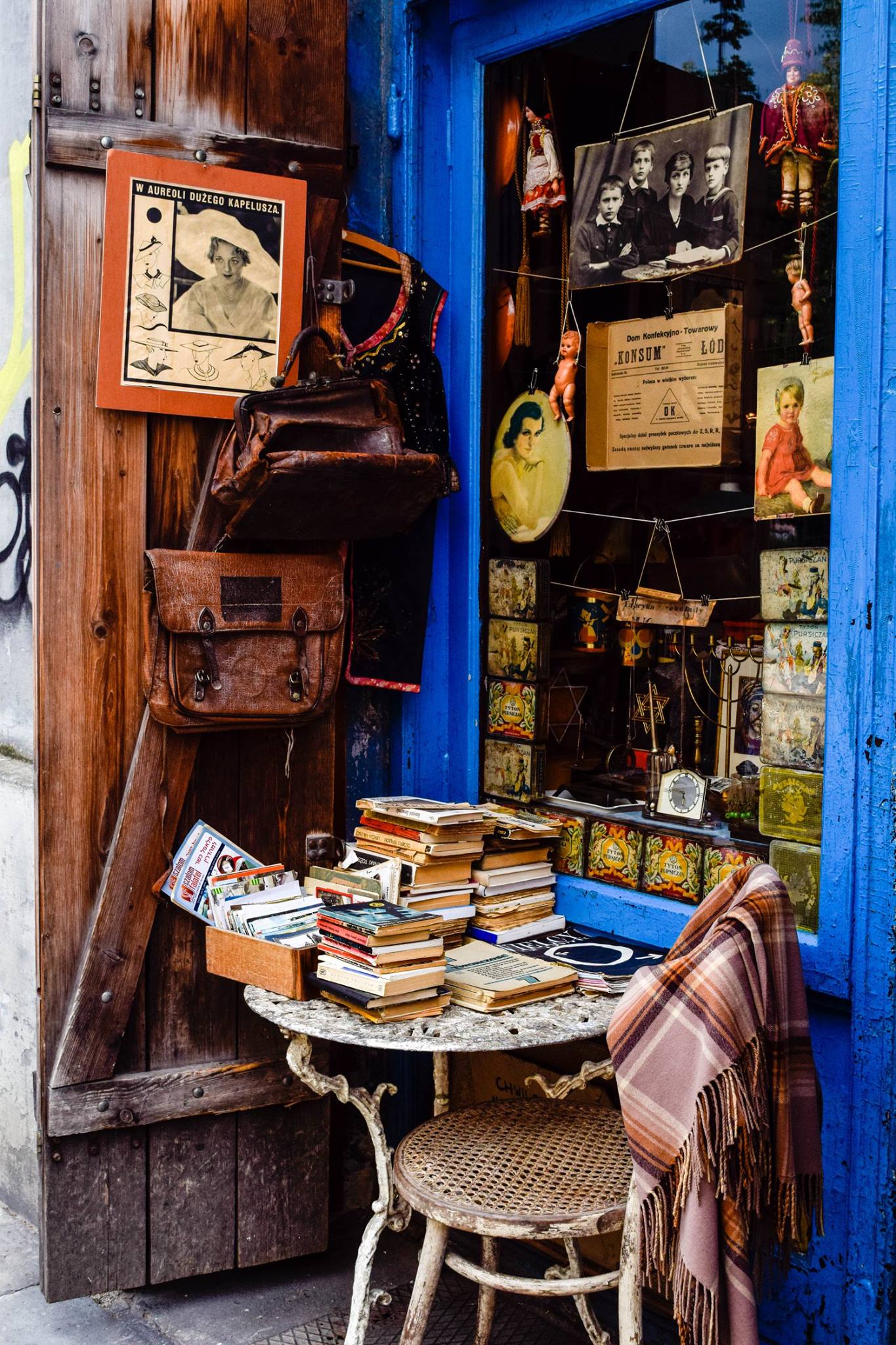
No visit to Kraków would be complete without a stop in Kazimierz. Once the center of Jewish life in Kraków before being systematically destroyed during the Holocaust, this neighborhood has re-emerged as one of the most exciting districts in Poland. Numerous cozy and atmospheric cafes and trendy restaurants, galleries and antique shops, street art, monuments of Jewish culture, and a dynamic nightlife draw tourists and locals alike with a magnetic force. You owe it to yourself to at least try Kraków’s famous street food, a zapiekanka, from the Okrąglak in Plac Nowy (New Square). It’s an incredibly walkable area, so whether on your own or on a free walking tour, it’s very worth dedicating some time to explore this fantastic neighborhood.

It’s a quick list of the essentials, but this is just the Kraków 101-version of what there is to do and see in this charming city. Stay tuned for future posts involving food recs, day trips, and more!

Hallyu: Make Way for the Korean Wave

written for my final directed study of my Master’s program

Intro
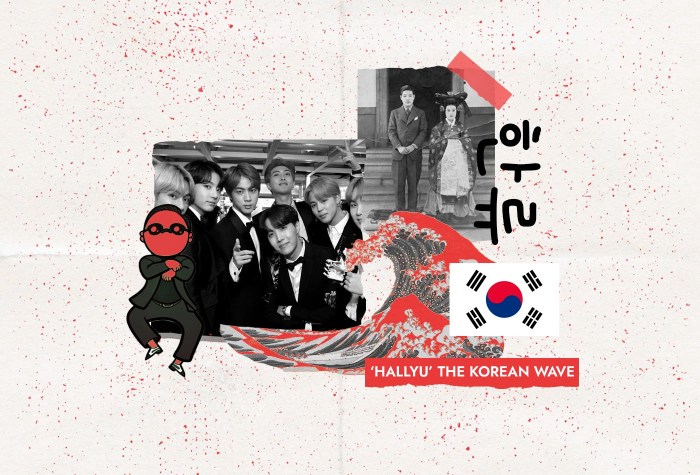
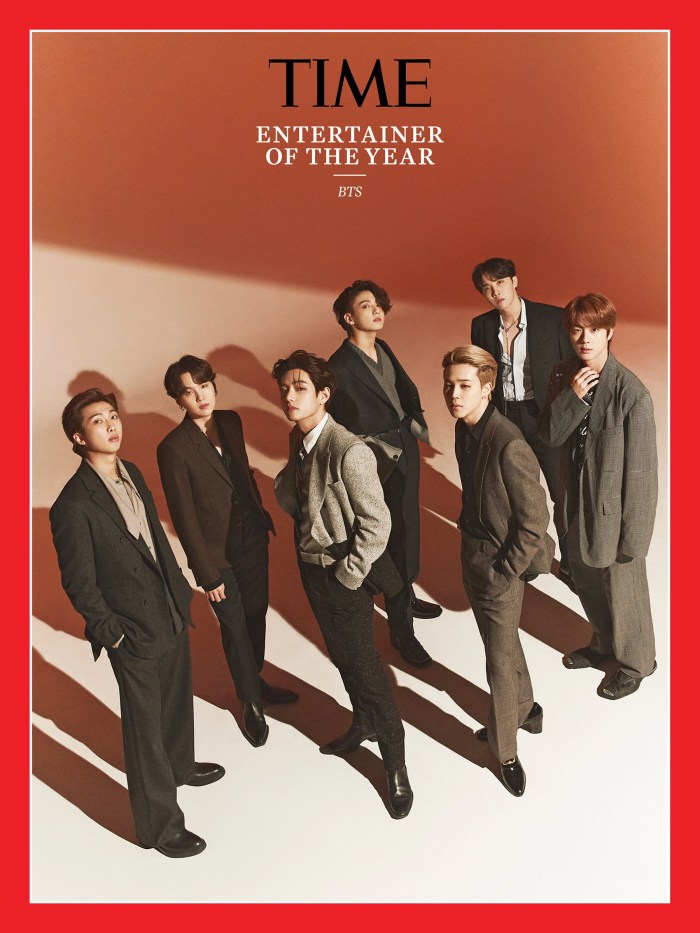
Initially an answer to what they feared as cultural imperialism from the US and Japan, Hallyu, which translates to “Korean Wave” in English, was a phenomenon originally particular to Asia and it referred to the impacts of South Korean popular culture, specifically music, games, films, fashion, on that region of the world. Nowadays, with the wild success of K-pop artists like BTS (who also were invited to speak at the General Assembly of the United Nations), Netflix’s Korean-language Squid Games, and the Oscar-winning film Parasite; it’s safe to say that the Hallyu has produced a tidal wave on a global scale.  

The director and cast of Parasite at the Oscars.

Setting the Scene
Initially, someone can see that there are “obvious” disadvantages in terms of permeating Korean culture globally, like the language but also in terms of “cultural visibility,” however, the advantage of Korea’s cultural products result from “its polyvalent culture and their content” (Marinescu 2014). 

Popular culture can increase overall attractiveness and potential influence of a nation on a global stage. Think of the British Invasion of the 1960s or the general global influence of American pop culture throughout the decades. Popular culture was once thought of as “low culture” and too emotional in Korea (Kim 2022). It started out as an answer to globalization, what the South Korean government really feared as “the Western and Japanese cultural invasion” (2022). This impetus, this motivation against American and Japanese cultural imperialism propelled the Korean culture industry as a national project to compete within globalization, not necessarily against it. Koreans felt pressure to open its media to foreign markets, but in the end, it seems that this was beneficial.

“Ingredients” of Success
Here in the US, the first obvious signs of Hallyu was the unexpected global sensation, beyond regional popularity in Asia: musician Psy and his hit “Gangnam Style.” But, the Korean wave was “originally initiated by the export of TV dramas since the late 1990s,” and it arguably became “more visible” through its intersection with “K-pop music, film, animation, online games, smartphones, fashion, cosmetics, food and lifestyle”  (Kim 2022). Hallyu isn’t just a simple flow of Korean culture as an export, it’s multi-directional and arguably a collaborative and interactive process, especially thanks to young, dedicated fan communities. Sociologist John Lie argues that there are three clear factors that have brought K-pop and other parts of Korean popular culture to the forefront (Lee 2015).

  1. It filled the gap of a specific niche: K-pop in particular filled a niche between local, national traditions of pop music in Asia and American pop music, which was often described as “sexualized” and “urban.” 
  2. The Korean government had majorly invested in the making of Hallyu. The Korean Wave started from private efforts, but the state played a key role in the development of cultural nationalism. It established the Korea Foundation for International Cultural Exchange (KOFICE) in an effort to orchestrate all endeavors- both state-sanctioned and private- related to the production of Hallyu. 
    • “Different countries around the world are cultivating their cultural industries competitively. They are in an intense competition to take cultural industries as the means to revive the nation’s economy and to step onto the global stage. Korea, too, is focusing on the unlimited potential of its cultural industry and has recognized the cultural industry as a new growth engine. (KOFICE 2008, cited in Nam 2013, 221)”
  3. It had a high production value. K-pop is not about some underground groups or hidden talents that broke big- there was the involvement of million-dollar talent agencies that scouted, trained and prepared idols to successfully take the world by storm. Young talents are recruited while in their teens and go through intense training, involving singing and perfecting synchronized dancing, learning foreign languages (and learning Korean for those recruited outside of Korea). They “are driven by Korea’s Confucian ethics of hard work, endurance, the disciplined body, obedience to higher authority, and affective labor” (Kim 2022). Their shows are polished to perfection and the total package of entertainment is appealing to fans across borders. 

Impacts: Economic and Beyond

When confronted with being dominated culturally, the Korean industries appropriated the American media system and in the process, constructed their own cultural spaces to build up their cinema and its media’s global competitiveness. Extensive discussions have taken place about the impact on Korean culture and the world, but the conversation “soon migrated from the initial cultural/media studies approach to the realms of economics, business, science and technology, and tourism” (Lee 2015). 

Tech:

Apple may be perceived as smart phone royalty, but according to the first quarter reports of 2022, Samsung was the leading smartphone vendor worldwide, shipping nearly 74 million units, while Apple’s toll reached around 57 million units (O’Dea 2022). With a brand value of over 85.4 billion U.S. dollars, Samsung was the most valuable South Korean brand in 2021 (Jobst 2022). Globally, Samsung produces more smartphones and mobile phones than any other brand, and has a strong presence in the tablet, television and computer components markets (2022). Surprised? You wouldn’t be alone, especially since in its early days, Samsung was recognized for producing cheap consumer electronic alternatives. Consumer perceptions have pivoted throughout the years, “largely due to Samsung’s successful branding and advertising strategy adopted in the 90s. (2022).” 


Automotive:

While Teslas and Toyotas still seem to dominate the automotive industry, Hyundai shows no intentions of hitting the brakes. The Hyundai Motor Company marked its steady climb in Interbrand’s Best Global Brands 2021 Rankings, placing 35th overall, up one notch from 2020. According to Interbrand’s comprehensive assessment, Hyundai Motor’s global brand value rose 6.3% year-on-year to $15.2 billion in 2021, its seventh straight year among the top 30-something brands. A robust sales mix of SUV and Genesis luxury models, reduced incentives from a lower level of inventory, and a favorable foreign exchange environment helped lift revenue in the second quarter, despite the slowdown in sales volume amid an adverse economic environment.

  • Interbrand’s positive appraisal of Hyundai Motor is based on the company’s eco-friendly, future-oriented focus on electrification and smart mobility solutions, and commitment to carbon neutrality by 2045. (Hyundai 2021)

Further examples: Burgers with BTS, Zara Reinterprets Hanbok

Works Cited

Hyundai Motor Company. (2021, October 21). Hyundai Motor’s brand value rises in Interbrand’s global ranking with electrification, smart mobility solutions. HYUNDAI MOTORS. Retrieved July 26, 2022, from https://www.hyundai.com/worldwide/en/company/newsroom/hyundai-motor%25E2%2580%2599s-brand-value-rises-in-interbrand%25E2%2580%2599s-global-ranking-with-electrification%252C-smart-mobility-solutions-0000016742 

Jobst, N. (2022, July 14). Most valuable South Korean brands 2021. Statista. Retrieved July 26, 2022, from https://www.statista.com/statistics/343161/brand-value-of-the-most-valuable-south-korean-brands/ 

Kim. (2022). The Soft power of the Korean wave : Parasite, BTS and drama (Kim, Ed.). Routledge, Taylor & Francis Group.

Lee, S. (2015). Hallyu 2.0: The Korean Wave in the Age of Social Media. https://doi.org/10.3998/mpub.7651262.

Marinescu, V. (Ed.). (2014). The global impact of south korean popular culture : Hallyu unbound. Lexington Books. 

Mintel. (2021, June 25). Burgers with BTS. Mintel trends. Retrieved July 20, 2022, from https://reports.mintel.com/trends/#/observation/1086715?fromSearch=%3Ffreetext%3Dsouth%2520korean%2520culture 

Mintel. (2022, March 20). Hanbok in Microfashion. Mintel trends. Retrieved July 18, 2022, from https://reports.mintel.com/trends/#/observation/1129697 

O’Dea, S. (2022, May 4). Global smartphone shipments 2022. Statista. Retrieved July 26, 2022, from https://www.statista.com/statistics/271490/quarterly-global-smartphone-shipments-by-vendor/ 

Brexit: The Aftershock for british business

written for my final directed study in my Master’s program

“The electorate was promised that departure from the EU would lead not only to fewer immigrants but to greater prosperity, more welfare spending, less crowded hospitals. Instead, six years after the vote, Britain is less prosperous and more unequal.”  

(Applebaum 2022)

Brief Background 

While the US was preparing for what was already shaping up to be a polarized presidential election in 2016, the United Kingdom was reeling from the results of a momentous referendum where 52% of adult Britons voted in favor of leaving the European Union (EU). Turnout for the June 2016 referendum was “71.8 percent, with more than 30 million people voting…but there were stark differences across the UK. Northern Ireland voted to remain in the EU, as did Scotland….England and Wales, however, voted in favor of Brexit” (Pruitt 2017). 

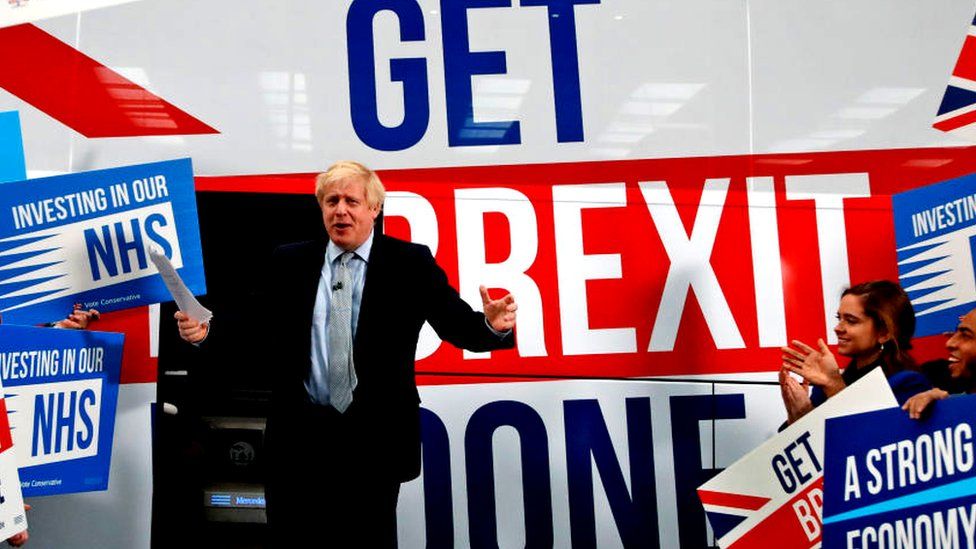
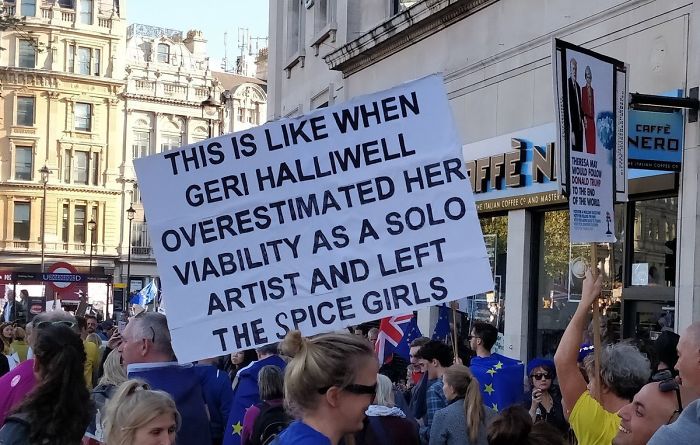
Boris Johnson’s party promised that a vote to leave was a vote against the status quo, that it was a vote for Britain to “take back control” of the freedoms that were so restricted by the EU’s regulations. Whether it was a vote for economics, or a vote of cultural and identity politics, it’s been a mess ever since. In the wake of the referendum, Britain became one of the worst performing economies in the G7 (Inman 2022), major companies were either moving their operations or deciding to not expand in the U.K., and the British pound dropped by almost 14% (Hunter 2016). 

Taking Back Or Losing Control?

Britain today is a poor and divided country. Parts of London and the southeast of England might be among the wealthiest places on the planet, but swaths of northern England, Wales, Scotland, and Northern Ireland are among Western Europe’s poorest. Barely a decade ago, the average Brit was as wealthy as the average German. Now they are about 15 percent poorer—and 30 percent worse off than the typical American.

(McTague 2022)

Crushed Free Trade
The EU is first and foremost a union of free trade, further assisted by the fact that most member nations (the UK famously not among the euro-currency carrying countries) also use the same currency, the euro. The UK had been a member of the EU since 1973. For any non-member countries, the EU imposes heavy taxes as a way to motivate EU nations to trade with one another, rather than with an outsider.  As a country that was now considered an outsider, Britain was now the victim of those intense trade restrictions, which was a threatening thought seeing as the UK massively depended on trade to support their economy.

After three and a half years of long, complicated negotiations, the UK finally left the EU on January 31, 2020, with a 1-year transition period ending on January 1, 2021, from which the EU-UK Trade and Cooperation Agreement (TCA) took effect. The TCA leaves Britain with a “less limiting” agreement than a full on no-deal Brexit would have, but not by much. According to the Financial Times, almost “one in three UK companies” have reported a decline in EU trade, with “small and medium-sized firms [particularly struggling] to navigate new procedures around exporting and importing with the bloc” (Thomas 2021).

The “hassle” of the new bureaucratic paperwork and added taxation has caused smaller, independent businesses to stop selling to the EU overall. Simon Spurell, of Cheshire Cheese Company (a specialist cheesemaker, shared his frustration: “ the government has successfully removed us from the EU as a business, it is no longer commercially viable and our distributors in France, Spain and Germany are not interested in doing business with us because of both the extra cost and the difficulties with the paperwork (Thomas 2021).

Movin’ on Out

There are some companies that began announcing relocations abroad, though some, like Dyson, announced the move had nothing to do with Brexit. However, there are rumblings of a “race to the Netherlands” that are a direct result of the referendum. According to the Netherlands Foreign Investment Agency (NFIA), of the “218 companies who have set up office in the Netherlands due to Brexit since the 2016 referendum, 78 have done so in the past year. The agency says it’s talking to a further 550 companies considering a relocation or an expansion to the Netherlands” (Persio 2021). The most notable moves include Panasonic, which already had moved its headquarters by 2019 because of “tax issues potentially created by Brexit,” and Sony, who didn’t shift personnel from existing UK operations, but directly stated that the “move would help it avoid customs issues tied to” Brexit (BBC 2019). 

According to a survey conducted by the Institute of Directors, “nearly a quarter of businesses that trade with the EU have had to relocate some operations or staff” and a quarter of businesses have had difficulty hiring staff from the EU (Thomas 2021). Britain currently has “proportionately more job vacancies than any large EU country” (Milliken 2022). The UK’s departure from the EU halted the free movement of workers throughout the bloc after 2020. For example, British manufacturing firm Corbetts the Galvanizers used to “heavily rely on a stream of workers from Poland and Romania,” the company now has had to attract and keep staff by implementing signing bonuses, higher starting pays, supermarket coupons, and even free fish and chips. According to recruitment website Indeed, sectors like “construction, cleaning and hospitality,” those which relied on migrant workers predominantly from Eastern Europe, “saw the greatest shortages and faster pay rises between 2019 and 2021 (2022).”

To Be Continued…

“The combination of a drawn-out decision to actually leave, followed up by a year-long transition period combined with the existing economic fallout of a global pandemic, made it incredibly hard for individuals, businesses, and even entire governments to plan much beyond the immediate future.” 

(Economics Explained 2021)

The unexpected Covid-19 global pandemic has made it difficult to assess what challenges or benefits are being felt as a result of Brexit or which hardships would have been felt anyway as a result of the pandemic. As of July 2022, “51 percent of people in Great Britain thought that it was wrong to leave the European Union, compared with 38 percent who thought it was the right decision” (Statista 2022). The share of people who don’t are not sure whether Brexit was the right or wrong decision has “generally been consistent and usually ranged between 11 and 14 percent” (2022).

Works Cited 

BBC. (2019, January 23). Sony to move Europe headquarters to avoid Brexit disruption. BBC News. Retrieved July 28, 2022, from https://www.bbc.com/news/business-46968720 

Economics Explained. (2021, November 12). How has Brexit been going? YouTube. Retrieved July 22, 2022, from https://www.youtube.com/watch?v=P0G3lYTOI0Q 

Hunter, M., Blitz, R., & Lewis, L. (2016, June 24). Pound tumbles to 30-year low as Britain votes Brexit. Financial Times. Retrieved July 28, 2022, from https://www.ft.com/content/8d8a100e-38c2-11e6-a780-b48ed7b6126f 

Inman, P. (2022, July 2). Dashboard of decline: Seven charts that explain Britain’s economic crisis. The Guardian. Retrieved July 22, 2022, from https://www.theguardian.com/business/2022/jul/02/dashboard-of-decline-seven-charts-that-explain-britains-economic-crisis 

McTague, T. (2022, July 7). Britain’s unbridgeable divide. The Atlantic. Retrieved July 28, 2022, from https://www.theatlantic.com/international/archive/2022/06/britain-brexit-economic-impact-boris-johnson/661332/ 

Milliken, D. (2022, July 4). Galvanisers wanted: Post-brexit worker shortages strain UK employers. Reuters. Retrieved July 24, 2022, from https://www.reuters.com/world/uk/galvanisers-wanted-post-brexit-worker-shortages-strain-uk-employers-2022-07-04/ 

Persio, S. L. (2021, February 19). How Brexit is Changing Business. Forbes. Retrieved July 17, 2022, from https://www.forbes.com/sites/sofialottopersio/2021/01/12/how-brexit-is-changing-business/?sh=2a429ee67f0d

Pruitt, S. (2017, March 29). The history behind Brexit. History.com. Retrieved July 27, 2022, from https://www.history.com/news/the-history-behind-brexit 

Statista Research Department. (2022, July 8). Brexit opinion poll 2022. Statista. Retrieved July 27, 2022, from https://www.statista.com/statistics/987347/brexit-opinion-poll/ 

Thomas, D., & Foster, P. (2021, June 27). Become an FT subscriber to read: Six Months in and UK businesses are still battling with Brexit. Financial Times. Retrieved July 24, 2022, from https://www.ft.com/content/eadc7c23-2125-4381-93ae-a54104e5ccc7 

Rome Recs: An Afternoon in Pigneto

We’ve all heard the phrase, “When in Rome, do as the Romans do.” The Eternal City will never lose its magic for me, but sometimes, you just want to get away from the historic center’s hustle, bustle and seemingly endless parade of selfie sticks. Don’t get me wrong, I love a sunset view of St. Peter’s cupola while sipping on an Aperol spritz from a rooftop terrace in the centro; but sometimes you don’t want to wait for a coveted spot or pay 14 euro for a spritz. 

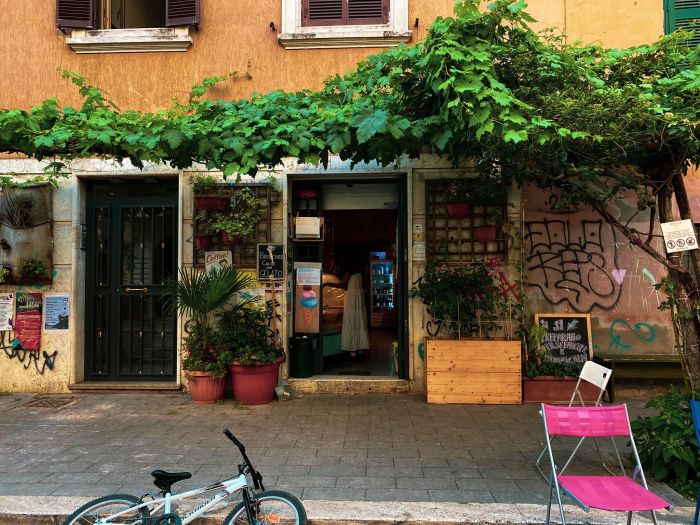
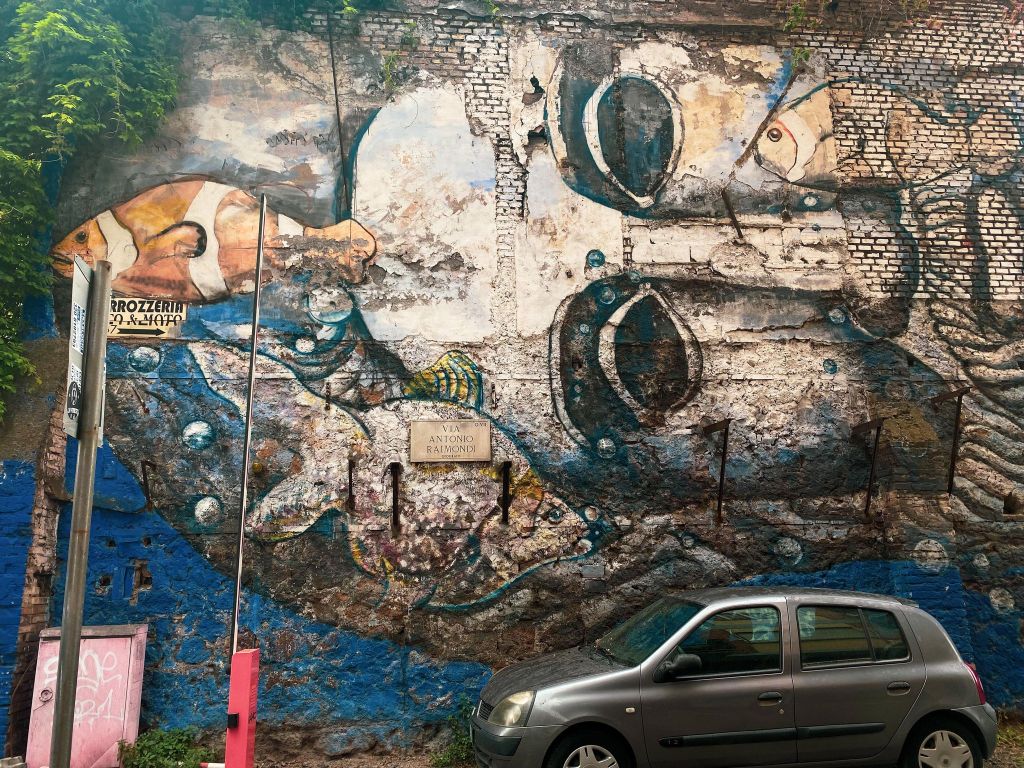
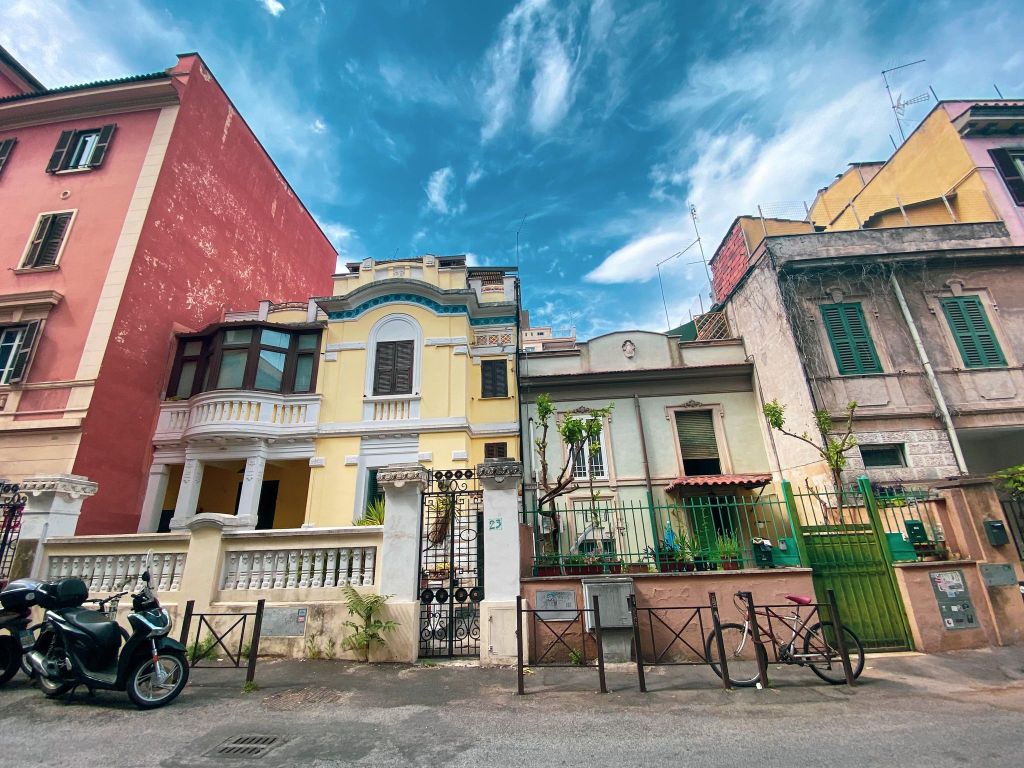
If you’re looking for a break from the tourist areas of Rome, you’ve got to look outside of the old city walls, in its lesser known quartieri. Last week, I had some time off and finally returned to a neighborhood I’ve had the pleasure of exploring a few years ago during my student years of living in the Italian capital — Pigneto. The once hidden gem is finally being “discovered” by travel influencers and expat bloggers, whereas just over a decade ago, it was still a neighborhood that many Roman mothers would tell their children to steer clear of, as it was literally quite on the “wrong side of the train tracks.” Nowadays, Pigneto is filled with street art, trendy cafes and restaurants and boasts vibrant nightlife. Here are just some highlights of my walk through this unique neighborhood of Rome. 

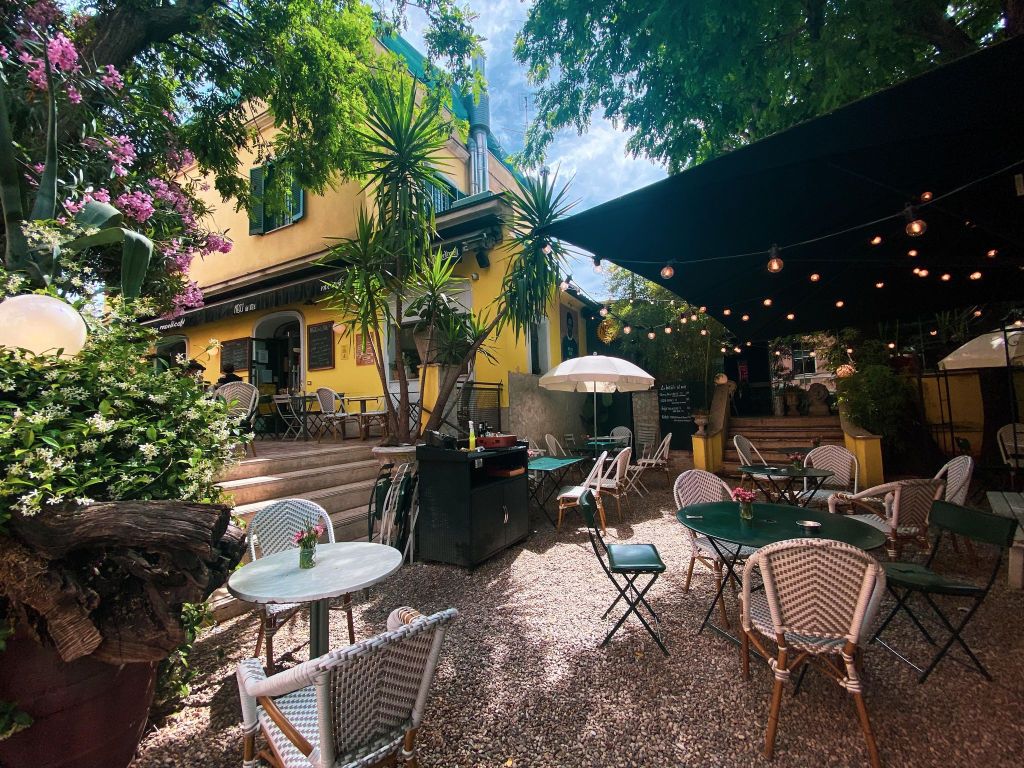
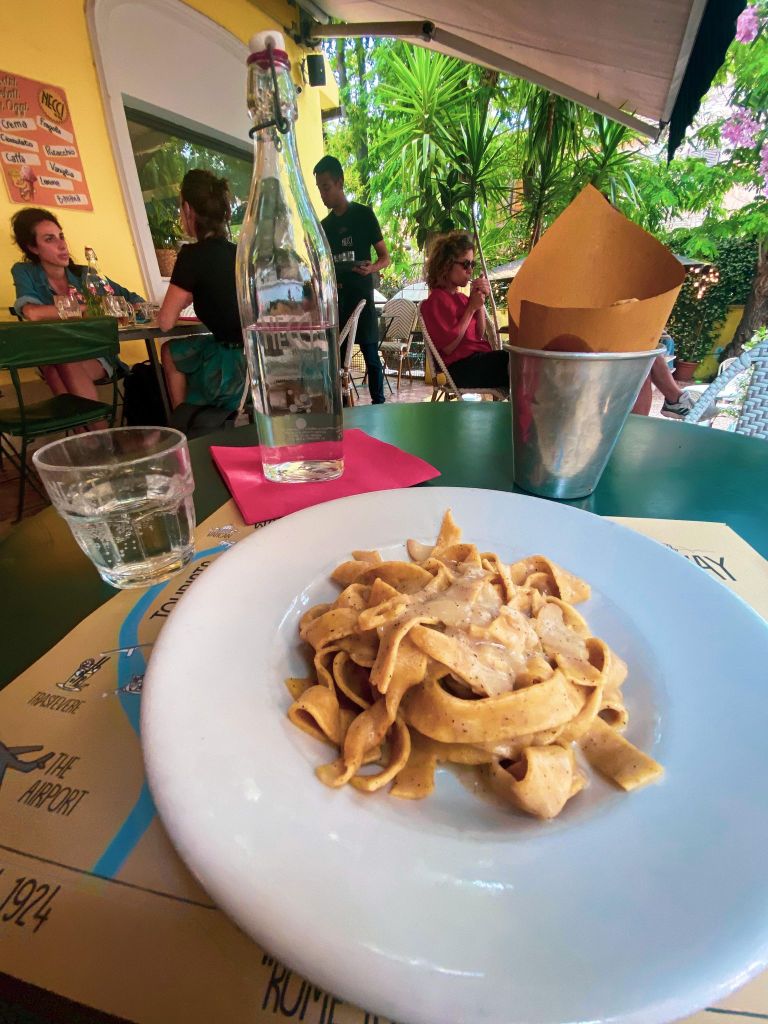
Bar Necci: Any guide of this neighborhood will undoubtedly include the historic bar Necci, which first opened its doors way back 1924! Opened from breakfast until the late hours after dinner, I actually stopped by for a quiet lunch and was not disappointed by their lovely patio, filled with trees, twinkle lights and an overall relaxed lunch crowd- which is a far cry from the Neorealist portrait of Roman working-class life famed local director Pier Paolo Pasolini depicted in his film Accattone in 1961. Years have passed since the mysterious murder of the director in the turbulent ‘70s and Necci itself burned down in 2009 and had to be rebuilt from scratch, but the famed bar is still a popular favorite with its atmosphere and its creative twists on Roman classics. I had the cacio e pepe with pear and it was delicious!

Architecture and Street Art:

If someone were to drop you off in the middle of Pigneto without any context- you may have had some trouble even knowing you were in Rome! It has a mixture of modern apartment buildings, single-family homes with gardens, and the old colorful bloc-style buildings that are typical for Italian working-class neighborhoods, which Pigneto once was. And for all of my fellow street-art aficionados, while on my way to the neighborhood’s vinyl haunt, Radiation Records, I caught some awesome murals, graffiti and wheatpaste art. You’ll notice the aforementioned Pasolini’s watchful eye observing his old neighborhood. 

Magnebevo ~ e sto ar Pigneto:

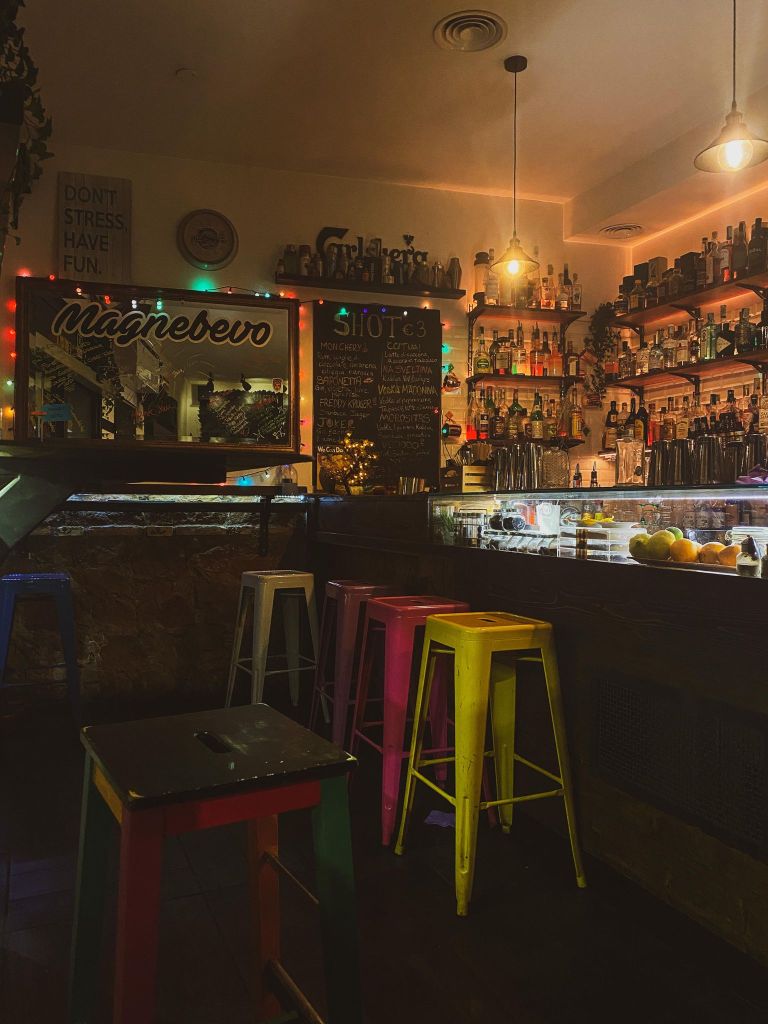
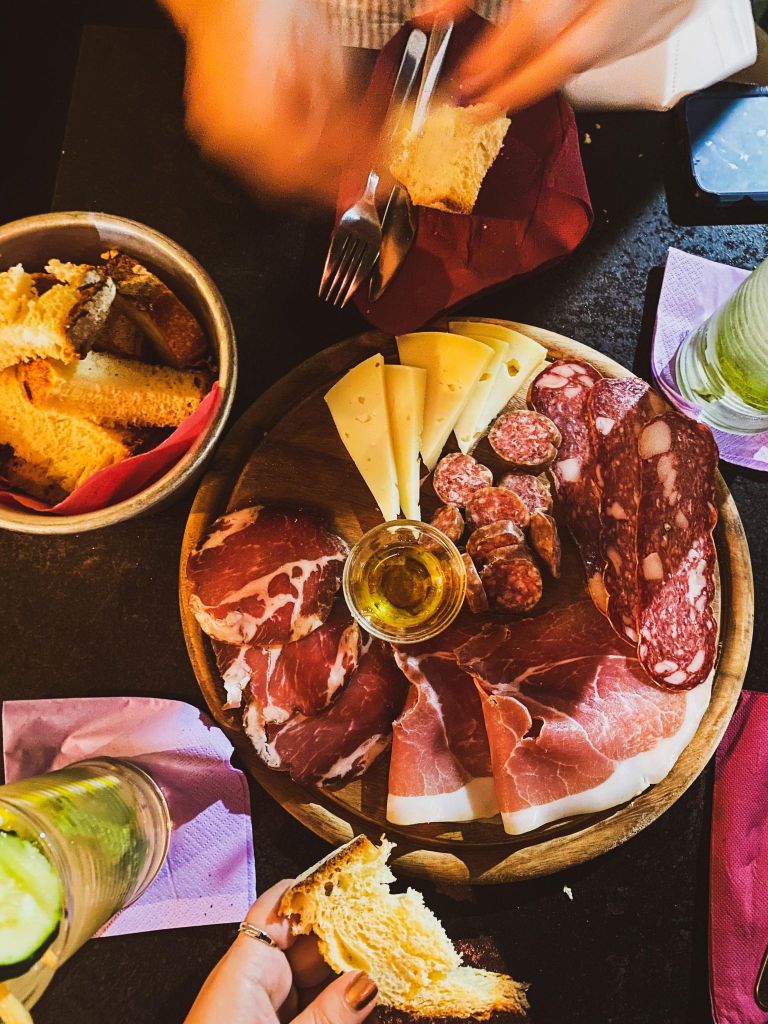
I ended the evening with a friend at this local favorite- Magnebevo e sto ar Pigneto, which translates roughly from the Roman dialect to “I eat,drink and am in Pigneto.” Located off the main neighborhood pedonale (pedestrian walkway) on Via Macerata, this small, woman-owned and run bar has a wonderful aperitivo deal with some fun and creative cocktails. The bartenders are not only highly skilled, but some of the coolest ladies you’ll ever meet. I learned that the owner, Marta, actually acts as a host to an Airbnb experience held at the bar that has guests basically have a mixology lesson: learning some history behind spritzes, new recipes, while enjoying some tasty aperitifs. While we missed the day’s lesson, we still enjoyed the casual and fun vibes at the bar. I can’t wait to go back. 

Poland’s Queen: A moment of Polish Pride

I was immediately intrigued by the Królowa teaser posted by Queer Eye’s Antoni Porowski. Would there finally be some Polish-language content available on the US Netflix that’s not about true crime or some dystopian history story? A dziewucha could dream, and this latest Polish miniseries is giving her some hope for what’s to come now that the streaming giant has announced a new regional HQ in Warszawa.

Trailer for Netlflix’s 2022 miniseries, Królowa.

The tale focuses on Sylwester, a retired tailor who spent the last 50 years of his life in Paris. He returns to Poland thanks to a letter sent to him by his granddaughter. The young woman shares that her mother (his daughter) is in need of a kidney transplant and asks whether he would consider seeing if he would be a viable donor. Sylwester, although he has never met his daughter because he emigrated from the country just before her birth, decides to reckon with his past and returns to Poland. As anyone could guess, his welcome is not necessarily warm, especially on the part of his daughter, and it is revealed that Dziadek (Grandpa) Sylwester has an “unusual” passion, at least by traditional Polish standards. In Paris, he performs on stage as the beloved drag queen Loretta. With this premise, a story of family and acceptance ensues.

Królowa is not groundbreaking by our US standards and there is a lot with the miniseries that seems to wrap up almost too neatly. You could probably already guess how this story ends, even if a bit unsure of the details in between. But for someone whose family comes from one of the most conservative PiS-supporting regions of Poland and has heard accounts of queer friends who have faced some sort of harassment or felt unsafe in Poland, it left me with some hope.

To make a very long and complex story short: Catholicism has been an important part of national identity in Poland, especially since Poles have tended to view the Catholic Church as a symbol of fighting for independence during the Communist regime that Poland fell under after WWII. In those days, the Catholic Church was a refuge, a supporter of a free, democratic Poland. Many older Poles to this day view Pope John Paul II as an instrumental factor of the country’s ability to topple the Soviet-backed regime in the 1980s. This is why the Church, and its morals and views, hold such esteem in the eyes of the older Polish generations that lived through the second half of the 20th century.

PiS, or Prawo i Sprawiedliwość (Law and Justice Party) was originally founded in 2001 as a center right, anti-establishment party, specifically opposed to former Communist political elites who were attempting to reinvent themselves after the fall of the USSR. Throughout the years, however; the party has transformed itself from a mainstream conservative party towards a full-on radical right party.

The Catholic Church in Poland is a significant influence on the ideological initiatives of PiS, and in turn, its support of the party legitimatizes PiS’ controversial party lines to tighten (or full out ban) both abortion rights and LGBT rights in Poland. Roe vs. Wade was overturned last week, not by US voters, but by a court- the same happened in Poland in 2020. PiS packed the constitutional tribunal and other courts with its appointees. And though there have been some small moments to celebrate and the community is still showing pride and solidarity, do remember, this is the same nation where its own president went so far to claim, “LGBT is not people, it’s an ideology which is worse than Communism.”

Sure, Królowa is not perfect, it’s just a story, but it’s a start. Time and time again, we learn that representation matters. If this is the direction that Polish stories from Netflix are going, it gives me some cautious optimism for Poland overall.

I’m Intrigued: Eurovision 2022

The most wonderful time of the year is upon us! No, not Christmas, but EUROVISION! As a resident Europhile and generally a fan of pop culture and current events-I’m stoked! Honestly, I didn’t become interested in the contest until about 2014 when Poland made it past the first round for the first time in forever. Was My Slowianie my favorite? It’s complicated (but generally, yes, I dig it for a variety of reasons) and we can explore Poland’s entries throughout the years at another time. For now, let’s focus on the matter at hand: our upcoming final this weekend! Here are some of my standouts:

UKRAINE:

Ukraine is overwhelmingly being projected as a favorite to win. This has garnered a mix of reactions. Many comments I’ve seen throughout social media are crying that the current political climate is giving the folk-rap band an unfair advantage and that the song competition shouldn’t be political, to which I call BS. Eurovision has always had both obvious and subtle hints of political intrigue, whether it was the UK getting last place the first year they competed after Brexit or Austria’s statement to have Conchita Wurst as their representative. It’s really one of the safest ways the European continent (and apparently Australia and Israel) can “duke it out” without getting arms involved. The artists have a platform for a cause that’s important to them and they’re using it to connect with the world. Also- isn’t that why music can be so powerful? It can evoke such strong emotions and having a song that stands for something is a heck of a lot more interesting than something that’s just catchy.

Kalush Orchestra’s “Stefania” has become a rallying cry to Ukranians throughout the world amidst the ongoing war that has ravaged the country since late February of this year. It’s a tribute to one of the band member’s mother, but with the war, the song has taken on a new meaning where Ukraine is the mother in the song. 

I love this entry regardless. Kalush Orchestra reminds me of one of my favorite Polish folk rock bands, Enej. I’m a fan of any folk-infused Slavic music– I think it’s a wonderful marriage of heritage/tradition and popular culture and on a personal note, it makes me feel at home. I applaud them for keeping the song in their language as well, instead of trying to translate it ( cough *pander* cough) to the masses. Additionally, Ukraine’s been putting in some of the most interesting entries into the song contest in recent history, and not just Go_A’s SHUM (though that too, is a banger if I say so myself. The music video itself is everything that makes my Slavic heart happy with its ‘weirdness’).  

ITALY:

There has to be some pressure to follow last year’s winners, Maneskin. Does this live up to “Zitti e Buoni?” Assolutamente, no, but at the same time it’s difficult to compare the two, as they live in two different worlds of music. I have mixed thoughts with “Brividi”. I admittedly am not too familiar with BLANCO, but I love Mahmood so much and I’m still salty that he didn’t win with “Soldi” back in 2019. It’s a beautiful duet with some emotional lyrics about how even the best intentions cannot save a relationship from any stumbles or mistakes. I love their voices together, the harmony of the chorus hits just right. That being said, I don’t think it’s winner material. I think they’ll definitely make Top 10, maybe Top 5, but I’d be surprised to see them as the winners of the overall competition.

LITHUANIA:

I’ve had a Monika LIU song grace one of my Discover Weekly playlists in 2021 and I’ve been a (albeit tangential) fan ever since. The songs I’m familiar with really give me a sense of nostalgia and I appreciate that it’s something different. She mentioned she’s here to make the Lithuanian language cool and I am here for her mission. Also she just oozes class. 


POLAND:

Normally, I cringe at Poland’s entries, but Ochman was a surprise. As a fellow US-born Pole, straddling two cultures, I feel oddly proud that he’s representing Poland at this year’s competition. The lyrics themselves aren’t revolutionary and they’re a tad repetitive. It’s definitely a moody ballad, not unlike some of the ones below, but I think it’s Ochman’s voice paired with the awesome staging I’ve seen in the rehearsals that makes me think this will give Poland a chance to at least make Top 10. A girl can dream, no? 

NETHERLANDS:

The fact that S10, real name Stien den Hollander, is only 21 years old makes me question what I’m doing with my life. “De Diepte,” which translates to ‘The Depth,’ is about depression and mental health after a tough break-up. I would learn Dutch just to sing along. I love the melody, her voice, the beat- all of it. It also happened to be on one of my Discover Weekly playlists a few months back and it’s been in my head ever since. I think she will easily make Top 10!

Here are my thoughts about the other entries from the brief clips of the Official Recap:


Albania- It’s giving me Game of Thrones/romance novel cover. I understand she was a bit of a fan favorite, so I’m surprised she didn’t make it to the finals. 

Armenia– Reminds me of a female version of The Lumineers. I kind of dig it. 

Australia– It’s giving me emotional breakup. If I had an ex that I disliked, this would probably be something I’d pretend I’m singing to them in a dramatic music video.   

Austria– Good dance pop moment. Definitely adding to my “Rusz Dupe!” (Move your ass!) playlist for my workouts.

Azerbaijan– Meh. Nice voice and melody, but not really memorable. 

Belgium– Awesome voice and again, it’s giving me break up but like more of an empowering sense, like a “ciao bambino, your loss” type of empowering.

Bulgaria– Ok, what were those drummer’s spiral cymbals? How? Otherwise a decent little rock song, but nothing to write home about.

Croatia– Alright Balkan Taylor Swift vibes.

Cyprus– Kind of forgettable. Sorry.

Czech Republic– I feel like I’ve heard this before and it’s definitely going to be one of my summer faves for 2022.

Denmark– I can appreciate a female rock group.

Estonia– I’m blasting this on the open road when I take a road trip out west.

Finland– Less intense version of Maneskin. I know the Scandinavian countries are more known for rock music entries to the contest, but I’m not as wowed as I was with Italy last year.

France– I feel like this is very SHUM-esque. I’m not mad at it. Honorable mention from me! 

Georgia– The Muppets? A circus? What’s happening?

Germany– Meh…

Greece– I’ve definitely heard she’s a favorite for this edition. It’s definitely a typical Eurovision ballad, but I’m indifferent.

Iceland– A departure from Daði og Gagnamagnið. Icelandic HAIM?

Ireland– Fun poppy song. It’ll go in my Who Run The World playlist (it’s my female empowerment playlist).

Israel– I want a tunnel of lights like in this music video clip. I don’t know what I’d do with one but it looks awesome. 

Latvia– INSTEAD OF MEAT, I EAT VEGGIES AND 🐱. This was definitely on my Tiktok many times and let’s be real, that first line feels like they included it just for the shock value.

Malta– Decent pop. Felt like the video was trying to be a United Colors of Benetton ad or an ode to Michael Jackson’s “Black and White,” though. 

Moldova– Ok, after my declaration of love for anything folk-infused, you know I was going to vibe with the “Hej Ho! Let’s go, folklore and rock’n’roll.”

Montenegro– I liked the melody and the violins/stringed instruments backing her. She has a lovely voice too. 

North Macedonia– I like her voice. I wish I had more to add because she looks cool.

Norway– I DO NOT UNDERSTAND THE HYPE. Is this this generation’s “What Does the Fox Say?” Like, I get that it fits the “weird and quirky” vibes of the spirit of Eurovision but I just don’t how this song makes it to the finals and not Latvia.

Portugal– Definitely gets an honorable mention from me. Again, here for an all-female indie atmosphere and I can also appreciate the idea of “Saudade” which is a Portuguese phrase that directly translates “missing” in English,  but really is best described as a “sort of longing wistful nostalgia for something or someone beloved” that is no longer there. I think it’s beautiful. 

Romania– Did I miss why he’s singing in Spanish?

San Marino– It’s difficult for me not to try and compare him to Maneskin. I don’t think he pulls it off as well, though. 

Serbia– It’s got a fun drop into the chorus. If I was a betting gal, which I’m not, while I can’t predict the winner, I can predict that the audience will inevitably screw up the rhythm as they try to clap along to any live performance of this. 

Slovenia- Cute, nice little disco funk moment. I just wish the lead vocalist had more stage presence. 

Spain– My friend Donny kept saying she’s trying too hard to be Shakira and I can’t unsee/unhear it. Definitely going on my summer playlist, though.

Sweden– Another good power ballad. 

Switzerland– I appreciate the message and I think he’s got a nice voice, but I’m not wowed. I don’t get how he qualified into the semi’s. 

UK– Ok, the singer looks like a fun time! I know the UK gets to the final anyway because of its Big Five status, right? Regardless, a decent song! I’ll probably add it to a playlist of mine at some point.

Third Culture Kids: The Key to Cracking the Global Communication Question?

written as a reflection for my Global & Multicultural Audiences and Stakeholders course

In my own words, a simplified definition of the word culture is a group of people who share context. This context is made up of language, rituals, shared stories, traditions, values, and life experiences. I can understand why there are several models used to classify cultures to compare them and why they often stay at a national level. Dimensions such as “power distance, individualism vs. collectivism, masculinity/femininity, uncertainty avoidance, long-/short-term orientation, and indulgence vs. restraint” are just some of the categories that the intricate shared context should be able to fall into to better describe them (De Mooij, 2019). But what happens when a culture is made up of people who seemingly cannot fit perfectly into one of those dimensions?

“A Third Culture Kid (TCK) is a person who has spent a significant part of his or her developmental years outside the parents’ culture. The TCK frequently builds relationships to all of the cultures, while not having full ownership in any. Although elements from each culture may be assimilated into the TCK’s life experience, the sense of belonging is in relationship to others of similar background” (Pollock 2017). Before exploring the concept of TCKs, I struggled with the concept of culture, specifically how it worked into my identity, especially because I’ve often found that cultural identity was also (perhaps mistakenly) tied with the question “Where are you from?”

Whenever I’m in Poland, strangers are surprised to learn that I’m from Chicago. I can pass as a ‘native’ Pole because of my ability to speak fluently and my knowledge of history, literature and popular culture. I share that ‘specific context’ with people born and raised in Poland in many ways. However, my relatives and friends in Poland half-joke how I am the only legitimate amerykanka (American), as I am the sole member of the family to be born in the United States. I am not fully Polish in their eyes, and I’ve had this sort of defensive complex about it since then. The conversation does come up sometimes, and I often felt the need to prove myself to be more Polish when I’m in Poland vs. when I’m back in Chicago or elsewhere.

That being said, to my American friends and acquaintances, I am the Polish friend. I’m the friend who has a myriad of “foreign” goodies in my fridge and pantry, who has family in Europe, and who sneaks Polish rap into our shared playlists. While I am an American because of my birthplace, accent and environment, I often joked I have a bit of “horseradish spice” because of my strong connection to my Slavic heritage. 

I couldn’t make all of the dimensions of one or the other align and I often felt like I had to choose one or the other to identify myself depending on my audience. It took being in a space removed from both of these spheres to help me recognize that while I identified with “symbols, rituals, heroes, and values” in both of cultures, I’d inadvertently created my own third culture in the process (De Mooij 2019, Pollock 2017). This overlap helped me find universality in an Irish pub in Rome, Italy, of all places.

Allow me to explain: yes, it was an Irish pub where English was spoken, but it was also where the expatriate community of Rome would come together, including some fellow TCKs. This global watering hole was more than a bar, it was a gathering place for people from all walks of life from the United Kingdom, Germany, Spain, the Netherlands, Iran, South Africa, and Turkey and exhibiting various levels of nomadic experiences. In the end, it didn’t matter where we came from. Like them, I wasn’t Roman or Italian, I didn’t feel particularly fully welcomed into the Polish culture my parents were from, and I wasn’t just American, where I grew up: I was accepted as a person with all of these dynamic identities and none of them felt the need to categorize me because of certain dimensions. I wasn’t just the Polish girl, just the amerykanka; I was Ola.

This Ola they knew happened to live in Rome, speak Italian without a heavy American accent because of her Polish lanaguage skills. This Ola had an idea of how to “act European” because of her experiences in familial Poland, but she was also “extroverted, excitable and friendly, like an American.” I didn’t have to be one or the other for this audience, and instead, we created a third-culture of expats in our chosen home in the Eternal City. I have a strong camaraderie with these individuals, and despite being shaped by our diverse life experiences, those differences pale in comparison to our bond of being mutual outsiders that couldn’t find their place in the world- together.

We do know that culture has a significant impact on communication with regards to how we develop, transmit and receive messages. While I think there is a strong argument in saying a global communication strategy can’t possibly exist because of all of the variables multiculturalism and diversity have, I do believe that TCKs can be key to understanding and potentially developing global communication plans, because of their paradoxical identities. Pollock reinforces this, saying “looking at the differences among them — of race, nationality, sponsoring organizations, and place where they….have grown up– you would think TCKs could have little in common… and yet they are a ….reunion of strangers” (Pollock 2017). As the world continues to shrink because of globalization, perhaps communication professionals can learn from TCKs and recreate the universality of finding home. 

Works Cited

De Mooij. M. K. (2019). Global marketing and advertising: Understanding cultural paradoxes.

Pollock, D. C., & E., V. R. R. (2017). Third culture kids: the experience of growing up among worlds. Nicholas Brealey Publishing. 

Globalization: Can Tuning Into Turkish TV Change Polish Attitudes?

written as a reflection for my Global & Multicultural Audiences and Stakeholders course

Globalization seems difficult to define, and yet it’s a buzzword that’s been inundating my coursework since my undergraduate years. I equate the textbook definition of globalization to integration and the interdependence of the world’s politics, economies, and cultures. It’s a result of cross-border trade and the rapid rise and development of technology. That makes it sound simple and almost clinical, but I find it incredible just how pervasive this phenomenon is in our lives.

As we’ve learned from Friedman and Florida, our actions in our part of the world do not end at our borders and vice versa. Because of the web reinforced by globalization, it is almost impossible to be truly isolated from the effects of world events. We’ve all felt this in our everyday lives, especially last year with a new virus appearing in seemingly-distant China or even something as bizarre as the Ever Given (the gift that kept on giving on Twitter) container ship becoming stuck in the Suez Canal (Shackelford, 2021). While those could be considered major events, globalization does not always have an immediate or serious magnitude.

My mind wanders to my family’s hometown, Augustów. Poland overall is somewhat regarded as a success story, at least economically, among the former Soviet-bloc countries. It did well after officially doing away with communism in 1989, and “while the rest of Europe fell into recession following the start of the global crisis in 2008, Poland kept growing” (Cienski, 2019). Augustów, however, is a bit of a different story. It is in the less-industrialized Podlaskie region, not too far from the borders of Belarus, Lithuania, and the Kaliningrad exclave. While the popular resort town, surrounded by lakes and forests, boasts around 30,000 residents, it can often feel like a village, especially in mentality and in terms of economic development. The day Augustów opened up its first and only McDonald’s in 2019, my relatives joked that we may become a destination in the world just yet. 

Reading Wojtczak’s article specifically, I thought of the experience of watching foreign television shows while in Poland. There have been many examples throughout the years, but the most recent that stands out in my mind are my older female relatives and their love for soap operas, especially Turkish ones. The canon of Polish telenovelas is already well-established and many series have incredibly long runs, but lately, Turkish soaps have dominated Polish public television, so much so that my babcia (grandmother) and ciocia (aunt) unceremoniously kicked me out of our small living room from an afternoon international soccer friendly match to watch an episode of Elif. 

I didn’t find myself baffled about their fervor, as I’d been used to sacrificing the screen to many a soap, including a dubbed version of The Bold and the Beautiful; what took me by surprise was seeing them so interested in a Turkish production. It had puzzled me, and almost seemed hypocritical, just given the anti-immigrant and anti-Islamic rhetoric from the far-right ruling Law and Justice party, which many folks from rural regions align themselves with. As a reference, a study was done regarding the attitude of Poles towards refugees from the 2015 crisis in Europe and there was a striking opposition for entry of refugees, specifically from the Middle East and Africa and the sentiment has not changed drastically since (Dudzińska, Kotnarowski 2019). From personal experience, I know people who joked about the McDonald’s opening that balked at the opening of doner kebab shops in our town because the owners were Arab (although I will note, younger generations of Poles enjoy the food especially in the early hours of the mornings). 

These brief notes oversimplify the situation, but the hypocritical cultural paradox does reveal “complex and hidden ongoing cultural processes” as Wojtczak discusses (Wojtczak, 2020). Poles don’t view the shows as an invasion of Turkish or Arabic culture; instead, they enjoy the shows because of the handsome cast, the intrigue, the costumes (if the show is a period piece), and the way they conservatively approach romance, rather than show nudity or wild sex scenes. Despite many liberal changes that came with the fall of communism, the people in power in Poland are strong proponents of Catholic, conservative values. Something that Wojtczak iterates is that culture is dynamic (Wojtczak, 2020). This reading and my reflections on my own experiences had me thinking- does culture change because of globalization, or is globalization propelled by shifts within a culture? Perhaps even something as seemingly inconsequential as a soap opera may make closed-minded Poles think twice in the future… it may just need a bit more time. Tune in sometime in the future.

Works Cited

Cienski, J. (2019, January 8). Poland’s transformation is a story worth telling. POLITICO. https://www.politico.eu/article/poland-transformation-economic-success/ 

Dudzińska, Kotnarowski. (2019, July 24). Imaginary Muslims: How the Polish right frames Islam. Brookings. https://www.brookings.edu/research/imaginary-muslims-how-polands-populists-frame-islam/

Shackelford, E. (2021, April 9). What a stranded container ship showed us about globalization. Chicago Tribune, Section 1, p. 19.Wojtczak, R. & Venter, B. (2020). Understanding globalization through cultural paradoxes: Chinese youth and “2 Broke Girls.” China Media Research, 16(1), 18-29.